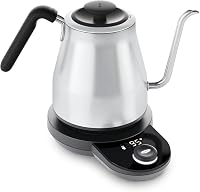
Fellow Stagg EKG Pro vs Pro Studio: What Differs? (November 2026)
The Fellow Stagg EKG Pro is the better buy for most people, with the same pour-over precision, controls and 0.9 liter capacity as the Pro Studio. The Pro Studio adds a glass base and metal accents for the same brewing job, so the Fellow Stagg EKG Pro vs Pro Studio choice is mostly about looks and base design.
On this page (8 sections)
- Fellow Stagg EKG Pro vs Pro Studio: which should you buy?
- Side-by-side: specs and features at a glance
- Pour-over performance: is there any brewing difference?
- Controls and display: what you get on both
- Who should buy the Stagg EKG Pro?
- Who should buy the Stagg EKG Pro Studio?
- How the base choice affects your counter
- The verdict: which Stagg should you take home?
The Fellow Stagg EKG Pro is the better buy for most people, with the same pour-over precision, controls and 0.9 liter capacity as the Pro Studio. The Pro Studio adds a glass base and metal accents for the same brewing job, so the Fellow Stagg EKG Pro vs Pro Studio choice is mostly about looks and base design.
Both are 0.9 liter gooseneck kettles with to-the-degree temperature control. The glass base is the real fork in the road, not the brewing.
This comparison looks at what each kettle includes, where they match and where the extra cost goes. Our score weighs specs and features against what you're shopping for.


Fellow Stagg EKG Pro vs Pro Studio: which should you buy?
Buy the Stagg EKG Pro if you want the full brewing package for less; buy the Pro Studio if the glass base and metal accents are worth the upgrade to you. The brewing features are the same, so decide on the base.
The Pro carries a 9.7 score and the Pro Studio a 9.3. That gap comes from the Studio's higher cost against the same features, not from a brewing weakness.
If the kettle sits on an open counter and you care how it looks, the Studio earns its place. If you'd rather put the money into coffee, the Pro does the same job.
What the two Stagg kettles share
Both have a precision gooseneck spout for a slow, controlled pour. Both heat with to-the-degree temperature control and a quick heat time.
The full-color LCD screen runs the same settings on each: scheduled boil, hold mode, altitude, chime, temperature units and clock. Guide Mode presets cover coffee styles and tea, and a Brew Stopwatch tracks your pour-over or steep.
Both are 0.9 liter kettles. Both carry the same marked maximum fill line inside the body, so neither should be filled past it.
That overlap is why the choice is narrow. For brewing, the two kettles are interchangeable.
Where the Pro Studio actually changes
The Studio's headline is the base. It uses a sleek glass base with metal accents, while the Pro uses its standard base.
The materials inside remain stainless steel on both. The matte finish appears on both, and both carry a walnut handle and lid pull.
The Studio weighs 1.93 kg. The Pro weighs 4.1 pounds.
If lifting and moving the kettle matters in your kitchen, the Pro's lighter figure is the friendlier one.
Side-by-side: specs and features at a glance
The specs line up almost entirely, and the base is the one visible difference. Use the table to check the details that matter for your counter.
| Feature | Stagg EKG Pro | Stagg EKG Pro Studio |
|---|---|---|
| Capacity | 0.9 liters | 0.9 liters |
| Spout | Precision gooseneck | Precision gooseneck |
| Temperature control | To-the-degree | To-the-degree |
| Display | Full-color LCD | Full-color LCD |
| Base | Standard base | Glass base with metal accents |
| Weight | 4.1 pounds | 1.93 kg |
| Size (L x W x H) | 10.34 x 6.77 x 7.87 in | 10.43 x 6.77 x 7.87 in |
| Guide Mode | Yes | Yes |
| Brew Stopwatch | Yes | Yes |
| Care | Hand wash only | Hand wash only |
The two kettles sit within a tenth of an inch of each other in length. The Studio runs slightly longer at 10.43 inches, while height and width match.
Both finishes are matte and stainless steel. Neither changes the pour or the temperature accuracy.
The table doesn't decide the winner. Your counter and your budget do.
What the Studio's base does for the counter
A glass base gives the Studio a lighter, more open look than the Pro's standard base. The metal accents add a touch of shine.
If your kitchen styling leans modern and the kettle is always out, the Studio fits that picture. It reads as a display piece as much as a tool.
That's the whole upgrade. The base changes the view, not the brew.
Why the Pro still leads on score
Our scores weigh specs and features against what you're shopping for. The Pro does the same brewing work as the Studio, so its lower cost pushes its score higher.
The Studio isn't a worse kettle. It's a premium finish on the same core product.
If two kettles pour and heat the same way, the one that asks less for the job gets the better score. That's the Pro here.
Pour-over performance: is there any brewing difference?
No. The spout, temperature control and preset modes are identical, so your coffee and tea should taste the same from either kettle.
Buyers chasing better extraction won't find it in the Studio base.
The precision gooseneck spout delivers a slow, steady flow that helps saturate the coffee bed evenly. That holds true on both versions.
To-the-degree temperature control lets you set 205°F for a pour-over or 180°F for green tea. Guide Mode gives you preset temperatures for coffee styles and tea.
The Brew Stopwatch tracks pour-over and steep time. Use it to keep your routine repeatable from cup to cup.
If you want more on the brewing side of the Pro, our Fellow Stagg EKG Pro review covers how the controls work in daily use. The Studio shares those controls.
Does the glass base change heat or pour?
It doesn't change the pour. The spout and handle are the same, so the flow and grip feel the same.
Heat comes from the same kettle body and temperature control. The base is where the kettle sits, not where the brewing changes.
Choose between the two on how the base looks and how much the kettle weighs. Those are the real differences.
Which kettle suits tea as well as coffee?
Both do. Guide Mode's preset temperatures cover tea as well as coffee styles, so a green tea at 180°F is a setting away on either model.
If tea is a big part of your day, the temperature control and tea posts can help you pick preset temperatures. The kettle then does the rest.
Neither kettle gives tea a special advantage. The shared preset system handles it.
Controls and display: what you get on both
The full-color display and its settings are the same on each kettle, so there's no control advantage to the Studio. Scheduling, hold mode, altitude, chime, units and clock all appear on both.
The intuitive interface makes the settings easy to reach. You can schedule a boil so water is ready when you walk into the kitchen.
Hold mode keeps water at your set temperature for a stretch. Altitude adjustment matters if you live high up, where water boils at a lower temperature.
The chime, temperature units and clock settings are small touches you set once. Neither kettle locks any of them away.
Setup for either kettle
Fill to or below the marked maximum fill line inside the body. Overfilling can push water out of the spout during heating or pouring.
Set your temperature or pick a Guide Mode preset. Then let the kettle heat while you grind and prep.
Both kettles are hand wash only. Wipe the outside and wash the interior by hand rather than putting the body in a dishwasher.
That care routine is the same on both. It's one more area where the two match.
Which one is easier to live with daily?
The Pro's lighter weight makes it easier to lift and move each morning. The Studio's glass base asks for a little more care when you move it around the counter.
If the kettle stays put, the weight matters less. If you clear the counter often, the Pro is the friendlier daily tool.
Neither kettle adds a control feature the other lacks. Daily life with either one looks very similar.
Who should buy the Stagg EKG Pro?
The Pro suits pour-over brewers who want precise temperature, a guided preset system and a stopwatch without paying for a decorative base. It's the pick for most readers.
It handles a 205°F pour-over and a 180°F green tea with the same ease. Guide Mode and the Brew Stopwatch keep your routine repeatable.
The 4.1 pound body is light enough to lift and set down each morning. The matte black finish with a walnut handle and lid pull looks good without calling attention to itself.
If you want the full story on the Pro, the Fellow Stagg EKG Pro review goes deeper. It's the kettle we'd suggest first for most kitchens.
Who should skip the Pro?
Skip it if the glass base and metal accents are the whole reason you're shopping. The Pro's standard base won't give you that look.
Skip it too if you want the lightest possible base setup for a very tight counter. The Studio's base is a different design, though it's the heavier of the two.
Who should buy the Stagg EKG Pro Studio?
The Studio suits anyone who wants the same brewing precision in a kettle that looks like a counter piece. The glass base and metal accents are the reason to choose it.
It brings the same precision spout, temperature control, Guide Mode and Brew Stopwatch. Scheduling, hold mode, altitude and chime settings all carry over.
The 0.9 liter capacity matches the Pro. So does the hand wash care and the marked maximum fill line.
Pick the Studio when the kettle lives on show. If your kitchen styling runs modern and you enjoy the glass-and-metal look, the extra cost buys you that view every day.
Who should skip the Studio?
Skip it if you'd rather spend the difference on coffee gear. The brewing features are already in the Pro.
Skip it if lifting weight matters most. The Studio weighs more than the lighter Pro.
How the base choice affects your counter
The base is the visible change, so let your counter and your routine decide. A glass base with metal accents suits an open, styled kitchen.
The Pro's base suits a busier counter where the kettle gets moved.
Think about where the kettle sits. On an open shelf or a clear counter, the Studio's base earns its keep.
Tucked beside appliances and moved each morning, the Pro's lighter body is easier.
The 2 foot cord on the Pro is worth checking against your outlet position. A short cord can limit where either kettle sits.
If you want to compare against other kettles in this class, our Fellow Stagg vs Corvo piece puts the Stagg line against the Corvo EKG Pro. And the Fellow Stagg vs OXO kettle comparison shows how the Stagg handles a rival's temperature approach.
If a different brand is on your shortlist, the Aarke kettle review covers another premium option. Read it before you settle on the Fellow base design.
Matching the kettle to your kitchen
Measure the spot before you order. The two kettles are close in size, so either should fit the same footprint.
Clear space above the kettle for steam and for lifting the lid. Both fill from the top, so overhead room matters.
Keep the base dry when you wipe the counter. Hand wash the body and wipe the base clean rather than soaking it.
Moving and storing either kettle
The Pro's 4.1 pound body is easier to lift into a cabinet. The Studio's heavier base setup makes it a better fit for a permanent counter spot.
Neither kettle should go in the dishwasher. Plan a quick hand wash after each use to keep the finish looking good.
If storage space is tight, measure the height and depth first. At 7.87 inches tall, both need a little headroom wherever they sit.
The verdict: which Stagg should you take home?
For most readers, the Fellow Stagg EKG Pro wins the Fellow Stagg EKG Pro vs Pro Studio comparison. It delivers the same gooseneck precision, to-the-degree temperature control, Guide Mode and Brew Stopwatch for less, and it's the lighter kettle to move.
Take the Pro Studio only when the glass base and metal accents are worth the extra to you. It's a fine kettle for a styled counter, but it brews the same cup.
The rule is simple. Pick the Pro for the best value in brewing precision.
Pick the Studio when the base design is the point, and the brewing is already handled either way.
If you're still weighing the Stagg line against rivals, the Fellow Stagg vs Corvo comparison and the Fellow Stagg vs OXO kettle piece help you place the Stagg family. The Fellow Stagg EKG Pro review rounds out the picture on the model we recommend.
Frequently asked questions
Is the Fellow Stagg EKG Pro Studio worth the extra over the Pro?
The Studio is worth it only if you want its glass base and metal accents on your counter. It brews the same way as the Pro, with the same spout, temperature control, Guide Mode and 0.9 liter capacity, so the extra cost goes on the base design.
Do the Stagg EKG Pro and Pro Studio brew differently?
No. Both use a precision gooseneck spout and to-the-degree temperature control, and both offer Guide Mode and a Brew Stopwatch.
The difference sits in the base and accents, not in how the water heats or pours.
How much water does each Stagg EKG Pro hold?
Both kettles hold 0.9 liters. Keep the water at or below the marked maximum fill line inside the body, because overfilling can push water out of the spout during heating or pouring.
Which Stagg is easier to move around the kitchen?
The Pro weighs 4.1 pounds and the Pro Studio weighs 1.93 kg. The Pro's figure is lighter when you convert it, so the Pro is the easier kettle to lift and shift when you clear the counter.
Can I schedule a boil on either Stagg EKG Pro model?
Yes. Both offer a scheduled boil, hold mode, altitude adjustment, a chime, temperature units and a clock through the full-color display.
These settings carry over on both versions.