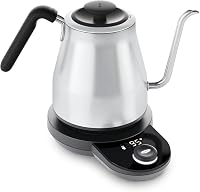
Fellow Stagg vs OXO Kettle: Which Is Better? (October 2026)
In the Fellow Stagg vs OXO kettle choice, pick the Fellow Stagg EKG Pro for small kitchens and its high-resolution LCD, or the OXO for staggered brewing with a temperature hold of up to 30 minutes. Both support controlled pour-over brewing with adjustable temperature and a brew timer.
On this page (10 sections)
- Fellow Stagg vs OXO kettle: which fits your routine?
- How much does the capacity difference matter?
- How do their temperature controls compare?
- Does temperature hold help with your morning routine?
- Will either spout make pour-over easier?
- Which kettle fits your counter and pouring area?
- How should you set up either kettle?
- How do cleaning and descaling affect the choice?
- Which common buying mistakes should you avoid?
- Which kettle should you choose?
The Fellow Stagg vs OXO kettle choice comes down to your brewing space and schedule: choose Fellow for a smaller footprint and high-resolution LCD, or OXO for drinks made a few minutes apart within its defined keep-warm window.
Both provide the core tools for pour-over coffee: adjustable temperature, a gooseneck spout and a brew timer. You don't need to choose Fellow just because you're serious about coffee, and OXO isn't limited to occasional brewing.
If you're comparing more than these 2 models, start with our guide to electric kettles for pour-over coffee.


Fellow Stagg vs OXO kettle: which fits your routine?
Fellow suits a compact coffee station; OXO suits a routine with pauses between drinks. Start with those practical differences before comparing small changes in water capacity.
The Stagg EKG Pro makes sense beside a dripper, scale and grinder when each item needs a clear place. Its screen is also a reason to choose it if you want a clear view of temperature and settings.
OXO is a strong fit if one person brews coffee while someone else gets ready for tea. Its hold setting gives you a defined window to return for another drink without planning every cup around the first heating cycle.
For either model, the gooseneck shape matters most when you guide water slowly across coffee grounds. If most of your hot water goes straight into a large teapot or cooking pot, consider whether controlled pouring deserves so much weight in your choice.
Which Fellow Stagg vs OXO kettle buyer should skip each?
Skip Fellow if its smaller size leaves you short of water; skip OXO if its larger footprint crowds your counter. Neither trade-off disappears once the kettle joins your daily routine.
Don't choose the Fellow mainly because you expect it to improve coffee without changing your brewing habits. A screen and fine temperature adjustment help you follow a recipe, but they can't correct an uneven grind or an unsuitable coffee-to-water ratio.
Skip OXO if you'll rarely use its hold window and prefer Fellow's dimensions and display. Extra capacity has little value when you usually heat enough water for one small brew.
Both are poor matches for someone who wants a dishwasher-safe kettle. They're also worth reconsidering if your main goal is filling large vessels quickly rather than controlling a slow stream.
How much does the capacity difference matter?
OXO holds 1 liter, while Fellow holds 0.9 liters. The extra 100 milliliters is a small buffer, not a jump to a family-size kettle.
Work out your full water use before choosing. A recipe calling for 500 milliliters of brewing water may also involve rinsing a paper filter and warming a mug or brewer.
That preparation water matters because it leaves the kettle before brewing starts. If your routine runs close to the fill limit, a small capacity difference can decide whether you need another heating cycle.
For smaller brews, either model gives you room to work. You don't have to fill a kettle to its maximum each time, but you must follow its minimum-fill instructions.
Avoid judging capacity by a claimed number of cups. Mugs vary, and a shared pot of tea uses water differently from separate pour-over brews.
If your household regularly needs more water than either model holds, move up in size instead of trying to squeeze extra water above the fill line. Our guide to how big an electric kettle you need helps you plan around actual servings.
How do their temperature controls compare?
Both let you adjust temperature in 1-degree steps, so basic temperature precision isn't a reason to dismiss either kettle. OXO spans 104°F to 212°F, while Fellow pairs its to-the-degree control with a high-resolution LCD.
Choose a target from your coffee recipe or tea instructions first. Different teas can need different water temperatures, so boiling every batch can work against the drink you're trying to make.
For coffee, keep the temperature steady while you learn how grind size and pouring affect the result. Changing several things at once makes it hard to know which change helped.
A selected temperature describes the water in the kettle, not the temperature throughout your brewer. A cold ceramic dripper, room-temperature mug and long pause before pouring all draw heat away.
Warm your brewing vessel when the recipe calls for it, then begin promptly. That simple habit makes fine temperature control more useful than repeatedly adjusting the target by a single degree.
Fellow's display may appeal if you want to glance at settings during preparation. For help choosing useful targets, see our guide to electric kettle temperature settings.
Does temperature hold help with your morning routine?
Temperature hold helps when you expect a short pause before brewing or another drink soon afterward. OXO maintains your selected setting for up to 30 minutes and shuts off automatically after the keep-warm cycle.
Fellow also has temperature hold, but confirm its duration if a particular window is essential. There's no reason to call one the longer-lasting option without that detail.
Think about how your morning actually runs. A hold function is useful if you heat water, pack lunch and then return to make coffee.
It matters less if you always start brewing as soon as the water is ready. In that routine, counter fit and pouring control deserve more attention than how long a kettle can wait.
Holding water also doesn't prepare a drink for you. Tea still needs a suitable steeping time, and coffee still needs a measured brew.
If you're reheating after adding cold water, let the kettle return to your target before pouring. Don't assume the earlier setting means newly added water is ready.
Will either spout make pour-over easier?
Both spouts support a directed, steady stream, but neither earns a clear advantage from shape alone. Fellow designs its precision spout for smooth flow, while OXO uses a curved spout and elongated shape for controlled pouring.
A gooseneck helps you place water where your recipe needs it. That's useful when wetting dry grounds, pouring in circles or adding small amounts without flooding the brewer.
Start with the spout close enough to the coffee bed to control the stream without touching the brewer. Tilt gradually rather than lifting the kettle high and tipping sharply.
Keep your wrist and grip relaxed, and move at a pace you can repeat. A dramatic spiral isn't required; the goal is even wetting and a pour rate that suits your recipe.
Remember that the kettle feels different as it empties. Practice with a comfortable amount of cool water over the sink before handling hot water around a small dripper.
If you mostly use immersion brewers or fill tea mugs, read whether you need a gooseneck kettle before making spout control your main buying reason.
How should you use the brew timer?
Use the timer to repeat a recipe and spot changes in brew time. Both kettles include one, and OXO's timer counts up.
Start timing at the same point each brew, usually when water first touches the grounds if that's what your recipe specifies. Record the total time alongside your coffee dose, water amount and grind setting.
A longer drawdown isn't automatically better or worse. If it changes sharply without a recipe change, check grind size, filter placement and pouring before blaming the kettle.
The timer is a shared tool here, so it shouldn't decide this comparison by itself. What matters is whether you'll use it consistently while pouring.
Which kettle fits your counter and pouring area?
Fellow takes up less counter space, making it the easier fit for a narrow coffee station. It measures 10.34 x 6.77 x 7.87 inches, compared with OXO's 12 x 8.4 x 7.9 inches, in length, width and height.
Measure the full space rather than judging by the kettle's body alone. A projecting spout needs clearance, and you need room to lift the kettle and remove the lid.
Leave a landing spot for the kettle beside the brewer. Reaching across a grinder or balancing the base near an edge creates an awkward routine every time you make coffee.
The Fellow has a 2-foot cable, so check the distance to your outlet before choosing its position. Keep any kettle cord away from the sink, hot cooking surfaces and places where it could be pulled.
OXO lifts from its base for cord-free pouring and has a cool-touch handle. That handle is a useful handling feature, but the water and escaping steam still need care.
Choose a position where you can pour without stretching over other appliances. A kettle that technically fits can still be a poor match if every brew requires moving several things.
How should you set up either kettle?
Start with the manual, a stable base position and a rinse routine before your first drink. Follow the model's first-use instructions, including any initial heating and discard steps.
Set the base on a dry, level surface. Keep the kettle's outside and its electrical contact area dry before placing it on the base.
Fill with fresh drinking water between the marked limits, then close the lid as directed. Overfilling can cause hot water to escape, while too little water may fall below the amount required for use.
For your first brew, lay out the filter, coffee, scale and mug before heating. This makes it easier to start at the chosen temperature instead of searching for equipment while the water waits.
Use a measured amount of water and repeat a familiar recipe. Once the routine feels settled, change one variable at a time to suit your coffee or tea.
If this is your first temperature-controlled model, our electric kettle buying guide explains how capacity, controls and daily use fit together.
How do cleaning and descaling affect the choice?
Neither kettle avoids regular care: both require hand washing. Choose based on your brewing needs, then plan a cleaning routine you can maintain.
Don't immerse the base or put electrical parts in water. Unplug the kettle and let it cool before cleaning, following the care instructions for each part.
Mineral scale can form inside kettles, especially with hard water. Check the interior regularly and descale using the method and cleaner approved in the manual.
Rinse thoroughly after descaling so cleaner doesn't carry into your next drink. Avoid scraping deposits with sharp tools or using abrasive pads on the finish.
Keep coffee grounds, tea leaves, milk and sweetened drinks out of the kettle. Brew in a separate vessel so residue doesn't collect inside a tool meant to heat water.
For a practical care routine, read how to descale an electric kettle. If you're comparing materials more broadly, our guide to stainless steel electric kettles covers other buying considerations.
Which common buying mistakes should you avoid?
Don't choose from the brand name, maximum capacity or temperature controls alone. Match the kettle to the steps you repeat every day.
The first mistake is expecting a gooseneck to fix an inconsistent recipe. Weighing coffee and water, using a suitable grind and repeating your pour pattern give the kettle's controls a useful job.
Another is counting only the water that ends up in the cup. Allow for filter rinsing and brewer warming before deciding that a smaller model is enough.
Don't assume more water always means more convenience. Heating a full kettle for a small drink adds unnecessary handling, so fill for the task while staying within the required limits.
Avoid treating automatic shut-off as permission to leave hot water within reach of children or pets. Plan a clear pouring area and return the kettle to a stable position after use.
Finally, don't buy around a feature you won't use. A hold setting suits pauses, a timer suits repeatable recipes, and a readable display suits people who check settings during preparation.
Which kettle should you choose?
In the Fellow Stagg vs OXO kettle decision, choose Fellow for a tight brewing station and its LCD interface. Choose OXO when its keep-warm window matches the gap between your drinks and its larger footprint fits comfortably.
If both meet those needs, picture the whole brew: filling, warming the brewer, pouring and cleaning. The better choice is the one that fits those steps without forcing a second batch or a crowded counter.
Our Fellow Stagg EKG Pro review and OXO gooseneck kettle review cover each model on its own. If neither fits your space or water needs, compare alternatives in our guide to electric kettles with temperature control.
Frequently asked questions
Is the Fellow Stagg EKG Pro better than the OXO kettle?
The Fellow is the better fit for a compact brewing station and buyers who want a high-resolution LCD; choose OXO if its defined keep-warm window better matches your routine. Both offer fine temperature adjustment and controlled pouring, so neither wins simply because you make pour-over coffee.
Which kettle has more capacity?
The OXO holds 1 liter, compared with 0.9 liters for the Fellow Stagg EKG Pro; that extra 100 milliliters is useful only if your usual brew nearly fills the Fellow. Count water for rinsing filters and warming your brewer before deciding whether either kettle covers your whole routine.
Can you set an exact brewing temperature on both kettles?
Yes, both offer temperature selection in 1-degree steps: OXO covers 104°F to 212°F, while Fellow offers to-the-degree control. Start with your coffee recipe or tea instructions, then adjust one setting at a time; a precise kettle setting doesn't keep water at that temperature throughout the brewing process.
Which kettle keeps water warm longer?
OXO has a defined hold of up to 30 minutes, but that doesn't guarantee a longer hold than Fellow; the Stagg EKG Pro also has temperature hold; confirm its duration if a specific window matters. Choose around the time you need between drinks rather than assuming either lasts longer.
Are both kettles suitable for pour-over coffee?
Yes, both use gooseneck spouts designed for a controlled stream and include a brew timer; they suit recipes that call for measured pours across a coffee bed. Neither removes the need to manage grind size, coffee dose and pouring technique, which also shape how your brew turns out.