Fellow Stagg EKG Pro Review: Worth It? (October 2026)
The Fellow Stagg EKG Pro is a strong fit for daily pour-over coffee when you want careful pouring and precise water temperature. Choose the Corvo for broader kitchen use or the OXO for a slightly larger gooseneck alternative.
On this page (10 sections)
- What does the Fellow Stagg EKG Pro offer?
- How does its temperature control help your coffee or tea?
- Is its capacity enough for your brewing routine?
- Stagg EKG Pro vs. Corvo EKG Pro
- Stagg EKG Pro vs. OXO Brew Pour Over Gooseneck Kettle
- How should you set up and use the kettle?
- Which mistakes are easiest to avoid?
- How much care does the Stagg need?
- Who should skip these kettles?
- Should you buy the Fellow Stagg EKG Pro?
The Fellow Stagg EKG Pro is a strong choice for daily pour-over coffee if you want to direct a steady stream over the grounds and repeat a chosen water temperature. It's less compelling if most of your hot water goes straight into a teapot, oatmeal bowl or French press.
Buy it for the pouring job you do most often. Compare the OXO Brew Pour Over Gooseneck Kettle for another gooseneck option, or the Fellow Corvo EKG Pro for a wider spout.
What does the Fellow Stagg EKG Pro offer?
The Stagg gives pour-over brewers control over water placement and temperature in one appliance. A brew timer and temperature hold support a routine with several timed pours.
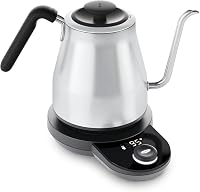
Fellow Stagg EKG Pro: Best for daily pour-over

- 0.9-liter capacity
- Gooseneck spout
- To-the-degree temperature control
- High-resolution LCD screen
Choose the Stagg for a daily pour-over routine where directing the water matters. Its brew timer and temperature hold help keep the steps organized.
Pros
- Gooseneck spout supports deliberate pouring
- Temperature adjusts by degree
- Brew timer helps track a recipe
Cons
- Small capacity limits shared batches
- Gooseneck is less suited to quick bulk pouring
Its high-resolution color LCD lets you view and adjust settings. The stainless steel body has a painted matte black finish, so gentle cleaning matters both inside and outside the kettle.
The main buying question is how often you'll use its pouring control. Someone who brews through a coffee dripper every morning has a clearer reason to choose it than someone who only needs boiling water.
Who benefits most from the Fellow Stagg EKG Pro spout?
Manual pour-over brewers benefit most because a narrow stream helps them aim at specific parts of the coffee bed. It also makes small water additions easier to manage without flooding the dripper.
That control still takes practice. Begin with a low, steady pour and a comfortable wrist position rather than trying to copy large circles or a high stream from a brewing video.
The spout can't correct an unsuitable grind or an uneven coffee bed. It gives you a way to make deliberate changes and repeat them.
See our guide to choosing a gooseneck kettle for pour-over if you're deciding whether that control matters for your routine.
How does its temperature control help your coffee or tea?
Degree-by-degree adjustment makes recipes easier to repeat because you can return to the same target instead of guessing how long boiled water should cool. It also lets you prepare tea that calls for water below boiling.
Start with the temperature recommended by your coffee recipe or tea package. Keep the dose, grind and brewing time steady before changing the water temperature, so you can tell which change affected the drink.
For pour-over coffee, record the temperature alongside the coffee dose and total water weight. A short note such as “same recipe, slightly cooler water” is more useful than changing several settings at once.
Temperature hold helps when your recipe involves pauses or when you prepare another drink shortly afterward. Check Fellow's instructions for operating guidance and hold settings before planning around a specific duration.
The brew timer serves a different purpose: it tracks your brewing steps. Start it at the same point in each recipe, usually when water first touches the grounds, rather than including a different amount of preparation time each morning.
Our guide to variable-temperature kettles explains how target settings differ from simply bringing water to a boil.
Is its capacity enough for your brewing routine?
The 0.9-liter capacity suits individual brewing better than shared rounds of large drinks. Count all the water you need in one session, including any used to rinse a paper filter or warm a brewer.
For example, a recipe using 500 milliliters of brewing water leaves room for a modest rinse. Two drinks needing 450 milliliters each would use the full nominal capacity before any rinse water is counted.
Check your usual recipe rather than relying on a cup count. Mug sizes vary, and the finished drink volume isn't always the same as the water poured into a coffee brewer.
If your household regularly needs well over this amount, choose a larger kettle. The OXO alternative below adds only 100 milliliters, so it won't solve a large household's capacity problem.
Heat the amount you expect to use while staying within the kettle's marked fill limits. Filling to the maximum every time adds unnecessary water to a small brewing session.
Stagg EKG Pro vs. Corvo EKG Pro
Choose the Stagg for deliberate pouring over coffee grounds and the Corvo for filling mugs, teapots and food containers. Spout shape is the clearest reason to choose between them.
| Buying question | Stagg EKG Pro | Corvo EKG Pro |
|---|---|---|
| Where does the water go? | Across a coffee bed in small pours | Into a mug, pot or bowl |
| What matters most? | Stream placement | Quicker water delivery |
| Which routine fits? | Manual pour-over | Tea, immersion coffee and food prep |
The Corvo adds Guide Mode temperature presets, a Brew Stopwatch and scheduling. You can also adjust hold mode, altitude settings, the chime and temperature units.
WiFi firmware updates work through the EKG Updater app. Treat that as a way to receive software changes, rather than assuming it means you can control every kettle function remotely.
The Corvo suits a kitchen where several people use the kettle for different jobs. A French press, for example, doesn't require the same careful stream placement as a pour-over dripper.
Skip the Corvo if learning manual pour-over is your main reason for buying. Its wider stream serves a different task, and choosing it for extra menu options would miss the more useful distinction.
Stagg EKG Pro vs. OXO Brew Pour Over Gooseneck Kettle
Choose the OXO if you want a gooseneck with a defined 30-minute hold window and a little extra room. Choose the Stagg if its smaller footprint and display better fit your brewing station.
The OXO holds 1 liter and adjusts from 104°F to 212°F in 1-degree steps. It includes a count-up brew timer and shuts off after the keep-warm cycle.
Its balanced design and cool-touch handle are useful features to consider if you often pour in stages. Still, fill only as much as your recipe needs, since less water means less weight to hold during a slow pour.
Allow about 12 by 8.4 inches for the OXO, compared with about 10.34 by 6.77 inches for the Stagg. Leave additional space to lift the kettle and remove its lid without reaching under a low shelf.
Skip the OXO if you're choosing it mainly to serve many more people. Its capacity gain is small, and both gooseneck designs favor controlled brewing over bulk water delivery.
For a closer look at these choices, see our Fellow Stagg vs. OXO comparison.
How should you set up and use the kettle?
Set up the kettle around a safe pouring route, with room for the base, brewer and mug. You should be able to lift and pour without stretching across the cord or another appliance.
Before the first brew, follow the model's instructions for rinsing and initial use. Read the fill marks and controls before heating water, rather than learning them while holding a hot kettle.
Use this simple routine:
- Fill with fresh water within the marked limits, allowing for your recipe and any rinse.
- Place the kettle securely on its dry base and choose the target temperature.
- Prepare the filter, coffee dose and receiving vessel while the water heats.
- Rinse the filter if your recipe calls for it, then discard that rinse water.
- Start the brew timer at a consistent point and follow your planned water additions.
For tea, heat plain water in the kettle and steep the leaves in a mug or teapot. Keeping leaves, milk and sweeteners out of the kettle makes routine cleaning simpler.
Practice pouring with cool water into an empty vessel before your first coffee brew. This helps you learn the tilt needed for a steady stream without handling hot water at the same time.
Which mistakes are easiest to avoid?
Avoid buying for extra features before checking spout shape, batch size and counter space. Those three choices affect daily use more than a menu option you rarely open.
A gooseneck doesn't need to be held high above the dripper. A lower pour is easier to aim, while a high stream can splash and disturb the coffee bed more than intended.
Don't assume the hottest setting is right for every drink. Follow the tea package or a clear coffee recipe first, then adjust based on the result.
Don't change temperature, grind and pour speed together when a cup tastes wrong. Change one thing at a time and keep enough notes to repeat the better result.
Also avoid treating a timer as a complete recipe. The same total brew time can produce different results if the coffee dose, grind or water additions change.
If you still need to choose a kettle type before a model, start with our electric kettle buying guide. It helps place pour-over features alongside everyday kitchen needs.
How much care does the Stagg need?
Plan on gentle hand cleaning and regular scale checks. All three kettles here require hand washing, so none is a fit for someone who expects to put the kettle in a dishwasher.
Let the kettle cool before cleaning, and keep the base and electrical contacts dry. Wipe the outside with a soft cloth and avoid abrasive pads on the painted finish.
Look inside periodically for mineral buildup, especially if you use hard water. Scale calls for descaling rather than harder scrubbing.
Follow the brand's approved method and rinse thoroughly afterward. Our guide to descaling an electric kettle explains the general process, but the model's care instructions should determine the cleaner and procedure you use.
Don't poke into the narrow spout with sharp tools. Preventing heavy buildup is easier than trying to scrape deposits out of a hard-to-reach passage.
Who should skip these kettles?
Skip this shortlist if you mainly need large batches or basic boiling. A kettle chosen for careful coffee pouring adds little value when most water goes into a large pot.
A household making several large drinks together should prioritize capacity. Someone who only prepares instant drinks should decide whether adjustable temperature and brewing controls will earn their counter space.
The Stagg is also a poor fit if you dislike slow, deliberate pouring. The Corvo is the more useful choice among these models when you want to fill a vessel quickly.
For more pour-over choices, visit our guide to the best gooseneck electric kettles. For a broader mix of spout shapes, use our temperature-control kettle guide.
Should you buy the Fellow Stagg EKG Pro?
Buy the Fellow Stagg EKG Pro for a regular manual pour-over routine where you want to repeat both water placement and temperature. Confirm that your full recipe, including rinse water, fits before choosing it.
Pick the Corvo if tea, French press coffee and food prep make up most of your use. Pick the OXO if you want controlled gooseneck pouring with its stated hold window and can spare the extra counter space.
For a decision beyond these three models, see which electric kettle brand is best.
Frequently asked questions
Is the Fellow Stagg EKG Pro worth it?
The Fellow Stagg EKG Pro is worth choosing for frequent pour-over brewing where flow control and repeatable water temperature matter. Skip it if you mainly fill a teapot or prepare instant drinks; those jobs benefit more from a wide spout, while larger households may need more capacity.
What is the capacity of the Fellow Stagg EKG Pro?
The Fellow Stagg EKG Pro holds 0.9 liters, or 900 milliliters; count rinse water as well as brewing water when deciding whether that's enough. A recipe using 500 milliliters plus a modest filter rinse fits more easily than several large drinks prepared together, which may require a second heating cycle.
Can the Fellow Stagg EKG Pro be used for tea?
Yes, the Fellow Stagg EKG Pro can heat water for tea, and its adjustable temperature suits leaves that need water below boiling; brew the tea in a separate vessel. If tea is your main drink, the Corvo's wider spout is a more direct fit for filling mugs and teapots.
How do you clean the Fellow Stagg EKG Pro?
Hand wash the Fellow Stagg EKG Pro and keep its base and electrical connections dry; follow Fellow's instructions for cleaning and mineral removal, and avoid abrasive tools on the painted finish. Our guide to cleaning an electric kettle explains the difference between routine cleaning and removing scale.