Fellow Stagg vs Corvo EKG Pro: Which Is Better? (October 2026)
In the Fellow Stagg vs Corvo choice, pick Stagg for regular pour-over coffee or Corvo for tea and varied kitchen tasks. Choose around the way you pour, since both offer precise temperature control.
On this page (8 sections)
- Fellow Stagg vs Corvo: which spout suits your routine?
- How do their temperature controls compare?
- Are the Stagg and Corvo the same size?
- Which Fellow EKG Pro is easier to use for tea?
- How should you set up and use either kettle?
- What should you know about care and materials?
- Which buying mistakes should you avoid?
- Which should you choose, Stagg or Corvo?
Choose Stagg for regular pour-over coffee and Corvo for tea, immersion coffee and varied hot-water tasks. The Fellow Stagg vs Corvo decision starts with how you pour: directing water over a coffee bed calls for a different spout than filling a teapot.
This comparison covers the EKG Pro versions of both kettles. Keep that model name in mind when comparing features with other Fellow kettles.
Both offer precise temperature settings, so you don't need to choose between coffee control and tea temperatures. The better buy is the shape you'll use most often, with enough capacity and the right controls for your routine.


Fellow Stagg vs Corvo: which spout suits your routine?
Pick Stagg for careful water placement or Corvo for quick filling. A gooseneck helps manage where a stream lands, while a wide spout suits jobs where getting water into the vessel matters more than tracing a pattern.
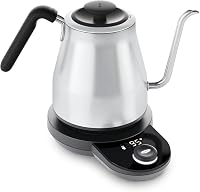
Stagg's precision spout is designed for a smooth, steady flow. For pour-over coffee, that helps you wet dry patches, work around the coffee bed and control how quickly water enters the brewer.
Corvo's wide spout is designed for a quick, controlled pour. It makes more sense for filling a mug, adding water to a French press or preparing oatmeal than for following small circles over coffee grounds.
Think about the task you repeat each morning. A kettle chosen for an occasional hobby can become an awkward fit for the drinks you make every day.
If you're unsure whether the shape matters for your brewer, read whether you need a gooseneck kettle. You can also compare other gooseneck kettles for pour-over before committing to Fellow.
Fellow Stagg vs Corvo for pour-over coffee
Stagg is the stronger choice for daily pour-over brewing, especially when your recipe calls for several small pours. Its spout helps you place water without relying on a broad stream.
Pour control still takes practice. Keep the spout reasonably close to the brewer, use a gentle tilt and avoid sudden wrist movements that send extra water into one spot.
Start with a simple recipe and repeat the same pour pattern. Changing grind size, water temperature and pouring speed together makes it harder to learn which change affected your cup.
Corvo can make pour-over coffee, but choose it for that job only if you're comfortable managing a wider stream. Someone buying a kettle mainly to learn pour-over should start with Stagg.
Who should skip each spout?
Skip Stagg if most of your water goes straight into a cup or pot. A narrow stream adds little value when the coffee grounds or tea leaves will simply steep in the water.
Skip Corvo if your favorite recipes depend on slow, targeted pours. Holding back a wider stream requires more attention, and its broader kitchen role won't help if pour-over is almost all you make.
How do their temperature controls compare?
Both kettles offer to-the-degree temperature control and a high-resolution color display. Either lets you choose a setting for your drink instead of treating every task as a full boil.
Stagg includes temperature hold and a brew timer. Those features support a measured coffee routine where you want to heat water, prepare the brewer and track the brew.
Corvo includes Guide Mode temperature presets for coffee styles and tea, plus a Brew Stopwatch. Its adjustable settings cover hold mode, scheduling, altitude, chime, temperature units and clock.
Choose presets if you want a starting point without remembering a temperature. Choose your own setting when you're following a recipe or adjusting a drink you already know well.
A preset isn't a rule for every tea or coffee. Start with the package directions or brew recipe, then adjust based on the result rather than assuming one setting suits every bag of leaves or beans.
Our guide to electric kettles with temperature control explains how these controls compare across kettle styles.
Which kettle suits a scheduled brewing routine?
Corvo's boil scheduling suits a predictable morning routine. Set the clock and temperature units first, then choose a schedule and hold setting that match when you'll actually brew.
Fill the kettle before the scheduled heating period and follow its fill markings. Scheduling still depends on preparing the kettle; it doesn't remove the need to check the water.
Use hold mode when you're preparing a brewer or making another drink soon. For a single cup followed by a long gap, there's little reason to keep water ready throughout the morning.
Corvo also supports WiFi firmware updates through the EKG Updater app. That is useful for receiving Fellow's feature changes, but spout shape should remain your first buying decision.
Are the Stagg and Corvo the same size?
Both hold 0.9 liters, so neither offers a capacity advantage. That equals 900 milliliters before you account for water used to rinse a filter or warm a brewing vessel.
For example, 2 drinks using 300 milliliters each leave room for some preparation water. Three drinks of that size use the full stated capacity, leaving nothing extra for rinsing.
Measure the water your routine actually needs. A large mug, a filter rinse and water left behind in the brewer can add up to more than the amount you plan to drink.
Stagg measures 10.34 x 6.77 x 7.87 inches, while Corvo measures 8.74 x 6.73 x 8 inches, in length, width and height. Corvo is shorter in length, while their widths are close.
Check the counter with the kettle facing the direction you'll use it. Leave room to remove the lid, lift the kettle and pour without reaching around cabinets or nearby appliances.
Stagg's cable is 2 feet long, so outlet placement deserves attention. Keep the cord away from the sink, hot surfaces and the counter edge.
Use our electric kettle size guide if you regularly serve several people. If your normal batch exceeds this capacity, both models deserve a second look before you buy.
Which Fellow EKG Pro is easier to use for tea?
Corvo is the better fit for a tea-focused kitchen, while Stagg suits people who mainly make pour-over coffee and also drink tea. Filling a cup or teapot rarely needs the precise water placement that makes a gooseneck useful.
With loose-leaf tea, control the water temperature and steep time separately. The kettle heats the water; your infuser, teapot or cup handles the leaves.
Follow the tea package's directions first. If a delicate tea tastes harsh, check both heat and steep time before changing the amount of tea.
For a household that alternates between tea and French press coffee, Corvo's presets offer useful starting points. Its stopwatch can help track the steep while you prepare the rest of breakfast.
Stagg remains a sensible single-kettle choice for a coffee-focused home. Making an occasional tea doesn't justify switching spout styles when your daily coffee recipe benefits from careful pouring.
Our guide to choosing an electric kettle for tea covers temperature, serving size and the controls worth prioritizing.
How should you set up and use either kettle?
Start with a stable counter, safe cord placement and the kettle's first-use instructions. Before the first brew, follow Fellow's cleaning and rinse steps for your model rather than adding an improvised cleaning mixture.
Check the electrical requirements against your outlet. Corvo is a 120-volt, 1200-watt model, so anyone buying for use in another region should confirm compatibility before ordering.
Choose a spot where steam won't collect directly beneath a cabinet. You should be able to lift the kettle and pour without stretching across the counter.
Fill with fresh drinking water within the marked limits. Close the lid properly, keep the base dry and return the kettle securely to its base before heating.
For a new pour-over routine, practice pouring plain water into your brewer over the sink. Learning the tilt and stream placement without coffee makes the first brew easier to manage.
For tea or immersion coffee, position the receiving vessel close enough to pour comfortably. Start gently rather than tipping the kettle sharply from the first drop.
Don't heat milk, soup or tea leaves in the kettle. Heat plain water, then add it to the ingredients in a separate vessel to avoid residue and difficult cleanup.
If you're still choosing between a specialist coffee kettle and a general kitchen model, our electric kettle buying guide gives you a broader starting point.
What should you know about care and materials?
Both kettles require hand washing, and regular scale removal belongs in the care routine. Let the kettle cool and disconnect it from power before cleaning.
Stagg uses stainless steel, plastic and heat-resistant silicone. Corvo has a 304 18/8 stainless steel body, a plastic handle and lid pull, and external food-grade silicone components that do not touch water.
Those details don't make either kettle an all-metal appliance. If avoiding certain water-contact materials drives your choice, our guide to what “no plastic” means on an electric kettle explains what to check.
Wooden accents are optional, so don't assume the Matte Black version includes them. Choose based on the exact finish you want rather than a photo showing another version.
Fellow advises removing Corvo's mineral deposits regularly. Mineral buildup is a normal kettle-care issue, especially where the water leaves visible deposits.
Use the cleaning agent and dilution approved in your model's instructions. Our guide to descaling an electric kettle explains the general process and why a thorough rinse matters.
Keep electrical parts out of water, and avoid abrasive pads on the finish. After cleaning, make sure the exterior and base contact area are dry before reconnecting power.
Inspect the interior as part of routine care rather than waiting for a thick layer of scale. The right cleaning interval depends on your water and how often you use the kettle.
Which buying mistakes should you avoid?
Avoid choosing by appearance or feature count before checking your brewing method. A setting you rarely use matters less than a spout you handle several times a day.
- Buying Stagg for an imagined coffee habit: Choose around the drinks you already make, unless you have a firm plan to learn pour-over.
- Buying Corvo to follow detailed pour-over recipes: If slow pulses and precise placement are central to the method, start with the gooseneck.
- Overlooking preparation water: Include filter rinsing and vessel warming when you work out capacity.
- Expecting temperature control to solve every flavor issue: Coffee grind, dose and brew time still matter, as do tea quantity and steep time.
- Confusing heating speed with pouring speed: Spout shape changes how water leaves the kettle; it doesn't tell you which model heats faster.
Neither kettle is an obvious buy for someone who only wants boiling water for an occasional mug. If you won't use temperature settings or value either pouring style, a simpler kettle may cover your needs.
Likewise, frequent large-batch users should prioritize capacity before display features. Refilling during every normal brew is a stronger reason to choose another model than a preset is to keep one of these.
Which should you choose, Stagg or Corvo?
For the Fellow Stagg vs Corvo decision, choose the kettle that supports your most frequent task. Treat occasional uses as a tie-breaker after spout shape and batch size.
Pick Stagg if you make pour-over most days, follow recipes with controlled pours or want to build that skill. Skip it if you mainly fill mugs and cooking vessels.
Pick Corvo if tea, French press coffee and other hot-water jobs share the kettle. Its wider pouring style and preset guidance fit a varied routine, especially when scheduling will get regular use.
Choose neither if you routinely need more water than either can hold or only need a simple boil. A premium control panel won't solve a capacity mismatch.
Before ordering, measure your usual batch and counter spot, then name the drink you'll make most often. If Stagg fits that routine, our Fellow Stagg EKG Pro review is the next read; our Fellow Stagg vs OXO comparison offers another coffee-kettle comparison.
Frequently asked questions
What is the difference between Fellow Stagg and Corvo?
The main difference is the spout: Stagg EKG Pro has a gooseneck for directing a steady stream, while Corvo EKG Pro has a wide spout for quicker pouring. Both hold 0.9 liters and offer precise temperature control, so choose by your main brewing method rather than capacity.
Can you use the Corvo EKG Pro for pour-over coffee?
Yes, Corvo can heat and pour water for pour-over coffee, but Stagg is the better choice for recipes built around a narrow stream. With Corvo, use a gentle tilt and watch how much water reaches the grounds; for daily pour-over brewing, choose Stagg's more focused spout.
Do both Fellow EKG Pro kettles have temperature control?
Yes, both kettles offer to-the-degree temperature control and a high-resolution color display. Corvo also offers Guide Mode temperature presets for coffee styles and tea; start with your coffee recipe or tea package directions, then change one setting at a time if you want to adjust the flavor.
Which Fellow kettle is better for tea?
Corvo is the better fit for a tea-focused kitchen because its wide spout suits filling cups and teapots, and Guide Mode offers temperature presets. Stagg still makes sense if you brew pour-over coffee most days and want the same kettle to handle an occasional cup of tea.