How Hot Does an Electric Kettle Get?
An electric kettle gets as hot as 212°F (100°C) at a rolling boil, and most switch off within seconds of reaching it. Preset models also hold lower targets from 160°F to 208°F, so the kettle's top temperature depends on how you set it.
On this page (8 sections)
- How hot does an electric kettle get at full boil?
- What do kettle temperature presets mean?
- Why does the water cool before I pour?
- How does a kettle know when to stop?
- What temperature should you actually use?
- Does scale change how hot the kettle gets?
- Is a hotter kettle always better?
- The bottom line on kettle temperature
An electric kettle gets as hot as 212°F (100°C) at a rolling boil at sea level. Most models shut off within seconds of reaching it, and preset kettles also stop at lower targets from 160°F to 208°F.
So "how hot does an electric kettle get" really depends on how you set it. A basic kettle only knows one temperature: full boil.
A variable-temperature kettle can hold water well below that for delicate tea.
How hot does an electric kettle get at full boil?
The top temperature is the local boiling point, 212°F (100°C) at sea level. The heating element runs until the water rolls, then the thermostat cuts power.
An open kettle can't push water past that ceiling. Once the water boils, extra heat turns it to steam instead of raising the temperature further.
That's why the boil point is the same in a 1-liter kettle and a 1.7-liter one.
Altitude changes the number. Water boils near 202°F in Denver and lower still in the mountains, so a kettle there shuts off sooner.
If you live high up, expect a boil that looks and sounds rolling at a lower reading on a thermometer.
Basic kettles with an on/off switch run straight to this point. That's the right water for black tea, herbal blends and instant foods, and the wrong water for green or white tea.
What do kettle temperature presets mean?
A preset is a target below the boil that the kettle holds until you pour. The preset names line up with common tea types, so you don't need to watch a thermometer.
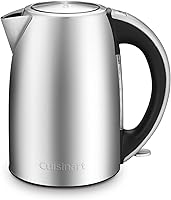
The Cuisinart CPK-17P1 shows the pattern well. It has 6 presets from 160°F to 200°F: 160°F for delicate teas, 175°F for green tea, 185°F for white tea, 190°F for oolong, 200°F for French press, and a boil setting for black tea or cocoa.
One-touch controls with blue LED indicators make the choice simple. A blue backlit water window with measurement marks lets you fill to the right line without guessing.
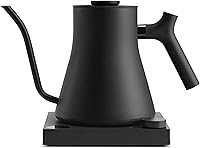
The Bonavita 1L Gooseneck Kettle takes a different approach. Its controls let you fine-tune in 1-degree steps from 140°F to 208°F, or you can tap one of its 6 preset buttons.
It also holds temperature for up to 60 minutes. The gooseneck spout delivers a controlled, steady stream, which matters when you're pouring over coffee grounds.
A preset kettle stops short of 212°F by design. Pick a basic model if you only ever need boiling water; pick a preset model if your shelf holds more than one kind of tea.
Why does the water cool before I pour?
Heat leaves the kettle as soon as the element stops. The walls, lid and spout all shed warmth, and the gap between "ready" and "poured" matters more than many people expect.
A kettle without a keep-warm feature drops several degrees in the first few minutes. Fill a mug, set the kettle down and come back later, and the water is no longer at the temperature you chose.
For green tea that fall can push the water into a harsher range.
The keep-warm feature fixes this. Cuisinart's version maintains your selected temperature for up to 30 minutes.
Bonavita holds its target for up to 60 minutes. Both let you brew a second cup without reheating from cold.
That longer hold suits someone who brews two or three cups in a sitting, while the 30-minute window covers a single pot of tea without leaving the element cycling for an hour.
Preheat the mug or teapot with a splash of hot water while the kettle works. A cold vessel pulls heat out of the water on contact, so the first pour lands cooler than the kettle's setting.
How does a kettle know when to stop?
A thermostat or sensor reads the water temperature and cuts the element. Basic kettles use a steam-sensitive switch; preset kettles add an electronic sensor and control board.
Our guide to how does an electric kettle work covers the parts in detail. For this question, the short version is that two safety systems matter.
First, boil-dry protection shuts the kettle off if the element runs without enough water. Second, auto shutoff ends the cycle when the target is reached.
Together they keep a kettle from overheating or running dry.
Preset models add a memory feature on some designs. The Cuisinart CPK-17P1 can be lifted off its base for 2 minutes without shutting off or losing its place in the brewing process.
That's useful when you fill a teapot and set the kettle down mid-pour.
A 360° swivel base and a stay-cool handle are convenience features rather than temperature controls. They make the kettle easier to use, not hotter.
A concealed heating element is worth knowing about too: it sits under the floor of the kettle, so mineral scale has less exposed metal to cling to.
What temperature should you actually use?
Match the number to what you're brewing, not to the kettle's maximum. Boiling water is not the default for every cup.
For green tea, aim for 160°F to 180°F. White tea sits around 185°F, oolong near 190°F, and black tea or herbal blends handle a full boil.
French press coffee usually wants about 200°F. Our guide to how to choose an electric kettle for tea walks through the settings for each type.
If your kettle has no presets, boil the water and let it rest. A minute or two off the boil brings it down toward the green-tea range.
A thermometer takes the guesswork out, but a preset kettle skips the step entirely.
One caution: don't pour boiling water straight into a cold glass or thin cup. Thermal shock can crack it.
Warm the vessel first. A dripless pour spout also helps here, since it keeps the stream aimed where you want it instead of splashing down the side of the cup.
Does scale change how hot the kettle gets?
Scale insulates the heating element and slows the boil. The water still reaches 212°F, but it takes longer, and the kettle works harder to get there.
Mineral buildup also coats the sensor on preset models. A scaled sensor can misread the water and stop the cycle at the wrong point.
If your kettle used to hit 175°F for green tea and now overshoots or undershoots, scale is a likely cause.
The OXO Brew All-Natural Descaling Solution is made for this job. It's phosphate-free and non-toxic, and it breaks down scale without the smell of vinegar.
One 14 fl oz bottle covers 3 uses and works with kettles and coffee makers. It's also compatible with water heaters and humidifiers, so one bottle can serve more than the kitchen.
Descale on a schedule that matches your water. Hard water areas need it more often.
A clean kettle boils faster and holds its presets more accurately.
Is a hotter kettle always better?
No. The best kettle for you is the one that reaches the temperature your drink needs and holds it.
Raw power matters less than control.
A 1.7-liter kettle at 1,500 watts brings a full load to a boil quickly. The Bonavita's 1,200 watts heats its 1-liter capacity in about 5 minutes.
Both are fast enough for daily use; the difference is how precisely you can steer them. The Cuisinart's larger capacity suits a household filling several mugs at once, while the Bonavita's 1-liter size keeps the pour light enough for a slow, even coffee bloom.
Shoppers looking for a basic electric kettle often just want fast boiling water for tea, coffee and cooking. If you brew delicate leaves, look at a preset or variable model first.
Our roundup of the best electric tea kettles collects the models with the most useful temperature ranges.
Check the top of the temperature range too. A kettle that stops at 200°F is fine for most tea but can't give you a true rolling boil for pasta or sterilizing a jar.
Look for a boil setting as well as low presets if you want both. That boil setting is also what you want for instant cocoa, oatmeal and noodles.
The bottom line on kettle temperature
An electric kettle gets as hot as 212°F at sea level, and preset models hold lower targets from 160°F to 208°F. That's the full answer to how hot an electric kettle gets, and it's also the reason a preset model earns its place on a tea shelf.
Pick a basic kettle if you only need boiling water. Pick the Cuisinart CPK-17P1 if you want 6 tea-friendly presets and a 30-minute keep-warm in a 1.7-liter kettle.
Pick the Bonavita 1L if you brew pour-over or want 1-degree control from 140°F to 208°F. Whichever you choose, descale it regularly so the sensor and element stay accurate.
Frequently asked questions
Does an electric kettle boil water hotter than 212°F?
No. Liquid water can't stay hotter than its local boiling point in an open kettle, so 212°F is the ceiling at sea level.
Some kettles keep heating after the boil to drive off steam, but the water itself holds at that temperature.
Why does my kettle stop before 212°F?
A preset or variable-temperature model is set to a lower target such as 175°F for green tea. Kettle controls stop the heating element when the sensor reads that temperature.
Basic kettles with a simple on/off switch run to a boil and shut off automatically.
Is 212°F too hot for tea?
It's too hot for delicate teas. Green, white and some oolong teas taste better when steeped nearer 160°F to 190°F.
Black tea and herbal blends handle a full boil well.
A variable-temperature kettle lets you choose the right number without a separate thermometer.
How long does an electric kettle take to boil?
Most full-size kettles bring water to a boil in 3 to 6 minutes. Power, water volume and starting temperature decide the time: a 1.7-liter kettle at 1,500 watts fills and heats more water than a 1-liter model at 1,200 watts.
Cold tap water takes longer than warm.