9 Best Electric Tea Kettles (October 2026)
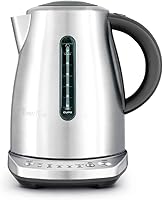
The best electric tea kettles for tea include the Aarke Kettle 1.2L for smaller tea batches, the Breville BKE720 Temp Select for shared tea breaks, and the Breville BKE820XL IQ Kettle for serving a household.
On this page (7 sections)
- How to choose the best electric tea kettle
- Best electric tea kettles by use
- Which features are worth paying attention to?
- How should you set up a new electric tea kettle?
- What mistakes make tea harder to get right?
- How do you keep an electric tea kettle clean?
- Which best electric tea kettle fits your daily routine?
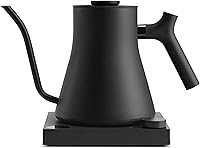
The best electric tea kettle for smaller daily batches is the Aarke Kettle 1.2L, our top pick for its broad temperature settings and double-wall body. Choose Cuisinart for preset-led refills, or Fellow Clyde if your drinks mainly call for boiling water.
Start with your tea's brewing directions, then choose enough capacity for your usual round. Paying for finer controls makes sense only when you'll use them.
Our electric kettle guide for tea explains how brewing habits shape that choice. For more models with adjustable heat, see our electric kettle temperature-control picks.
Our picks at a glance
-
1

-
2

-
3

- 4
 Check it
Smeg Variable Temperature Kettle 1.7L
Best for retro kitchen setups - 5
 Check it
Cuisinart CPK-17P1 Electric Kettle
Best for repeat tea pours - 6
 Check it
OXO Brew Adjustable Temperature Kettle
Best for custom tea recipes - 7
 Check it
Cocinare FLOW B9 Gooseneck Kettle
Best for tea and pour-over - 8
 Check it
Fellow Clyde Electric Kettle 1.5L
Best for boil-only routines - 9
 Best for visible preset brewingCheck it
How to choose the best electric tea kettle
Choose the best electric tea kettle by matching temperature controls, usable capacity and pouring style to your daily drinks. Then check whether its size and cleaning needs suit your kitchen.
We compared these 9 models by their controls, capacity, materials, serving features and care needs. The highest-scoring choice fits smaller tea batches well, but a household kettle or boil-only model may serve your routine better.
| Product | Best for | Capacity | Temperature control | Material | Our score |
|---|---|---|---|---|---|
| Aarke Kettle 1.2L | smaller tea batches | 1.2 L | Settings from 104°F to 212°F | Stainless steel, polypropylene and silicone | 8.6 |
| Breville BKE720 Temp Select | shared tea breaks | 7 cups | Five settings | Stainless steel | 8.5 |
| Breville BKE820XL IQ Kettle | serving a household | 1.8 L | Five settings | Stainless steel | 8.3 |
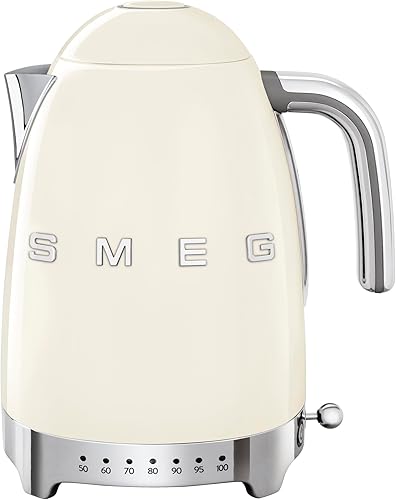
| Smeg Variable Temperature Kettle 1.7L | retro kitchen setups | 1.7 L | 122°F to 212°F | Stainless steel | 8.0 |
| Cuisinart CPK-17P1 Electric Kettle | repeat tea pours | 1.7 L | 160°F, 175°F, 185°F, 190°F, 200°F and Boil | Stainless steel | 8.0 |
| OXO Brew Adjustable Temperature Kettle | custom tea recipes | 1.75 L | 104°F to 212°F | Borosilicate glass | 8.0 |
| Cocinare FLOW B9 Gooseneck Kettle | tea and pour-over | 0.9 L | 1°F steps | Stainless steel | 8.0 |
| Fellow Clyde Electric Kettle 1.5L | boil-only routines | 1.5 L | Boils water | Stainless steel | 7.7 |
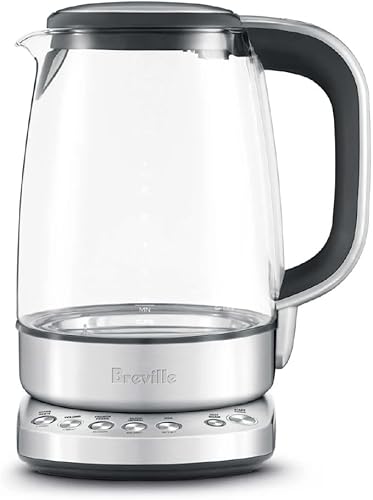
| Breville BKE830XL IQ Pure | visible preset brewing | 1.7 L | Five settings | Glass jug with stainless steel power base | 7.5 |
Which controls suit an electric tea kettle?
Presets suit familiar daily drinks; adjustable controls suit specific recipes. Read a few of your tea packages before choosing, since a tea name on a button may not match every blend.
A temperature range doesn't tell you how many settings a kettle offers. Aarke provides multiple settings across its range, while OXO uses a dial and Cocinare offers adjustments in single-degree steps.
Fine adjustment lets you follow a recipe more closely, but it doesn't replace measuring tea or timing the steep. Our guide to what variable temperature means on a kettle explains the control differences.
How much water will you actually use?
Measure the water your mugs or teapot hold, then add up a normal round. Two large mugs can need more water than several small teacups, so a maker's cup count isn't a reliable serving plan.
For example, 3 mugs holding 350 mL each need 1.05 L before allowing for any other water use. That batch exceeds the smallest kettle here.
A larger maximum capacity doesn't mean you must fill it each time. Check the minimum fill requirement too, especially for single drinks, and use our electric kettle size guide for more help.
Should you choose glass or stainless steel?
Choose glass for water visibility or steel if you prefer an opaque body. Neither material tells you everything about the handle, lid, seals or other parts that may contact water.
Double-wall construction can also change heat retention and exterior handling. For a closer comparison, read our guide to glass versus stainless steel electric kettles.
Avoid assuming that a stainless steel kettle has no plastic parts. If water-contact materials drive your choice, look for an explicit description rather than relying on the body's appearance.
Best electric tea kettles by use
Choose Aarke for smaller batches, then compare the alternatives by the job you need them to do. Preset buttons, a visible jug or a controlled stream can matter more than the overall score.
Aarke Kettle 1.2L: Best for smaller tea batches
- Temperature settings from 104°F to 212°F
- 1.2 L capacity
- Double-wall construction
- Dry-boil protection
A smaller jug with broad temperature settings suits daily tea without the capacity of a full-size household kettle. The wide opening gives you access for cleaning.
Pros
- Broad temperature range
- Double-wall body
- Wide cleaning opening
Cons
- Less room for group servings
- Hand wash only
Aarke suits a tea drinker who wants several heat settings without moving to a full-size household jug. Its 1.2 L capacity makes sense for individual drinks or a modest shared pot.
The settings span 104°F to 212°F, giving you choices below boiling as well as a full boil. A memory function helps if you return to the same setting often.
Aarke designs the double-wall body to retain heat longer. That construction is useful when you pour in stages, though heat retention isn't the same feature as an active keep-warm cycle.
The wide opening and concealed heating element give you access to the chamber for cleaning. A removable stainless steel limescale filter and non-drip spout round out its tea-serving features.
Choose it when small daily batches and easy cleaning access lead your priorities. Skip it if a normal round already fills a large teapot and several mugs, since repeated batches would undo the benefit of the smaller jug.
Breville BKE720 Temp Select: Best for shared tea breaks
- Five temperature settings
- 7-cup capacity
- 20-minute keep warm
- Soft-top lid
One-touch tea and coffee settings simplify a shared kitchen routine. The keep-warm function gives people time to collect their drinks.
Pros
- Simple preset buttons
- 20-minute keep warm
- Soft-top lid
Cons
- No setting between presets
- Hand wash only
The Breville BKE720 Temp Select suits a shared kitchen where people want familiar tea buttons rather than a temperature dial. Its 5 settings cover black, green, white and oolong tea, plus French press coffee.
The 7-cup jug gives you room for a shared round. Measure your mugs first, since that cup label doesn't mean 7 large servings.
A 20-minute keep-warm option helps when one person pours immediately and another arrives later. It holds the water ready; steeping still happens separately in your cup or pot.
Breville's soft-top lid is designed to release steam gently, while the cordless jug lifts away from its base for serving. Cord storage helps keep spare cable off the work surface.
Buy it if simple shared controls matter more than choosing a specific number. Skip it if your usual tea directions fall between preset options, or if you rarely make enough water to need a larger jug.
Breville BKE820XL IQ Kettle: Best for serving a household
- Five preprogrammed settings
- 1.8 L capacity
- 20-minute keep warm
- Auto shut-off and boil-dry protection
A full-size stainless steel jug suits shared pots and several mugs. Tea presets keep the controls straightforward.
Pros
- Room for larger batches
- Five preprogrammed settings
- Auto shut-off and boil-dry protection
Cons
- Fixed temperature choices
- Hand wash only
The Breville BKE820XL IQ Kettle suits a household that routinely needs a substantial batch of hot water. It combines a stainless steel jug with 5 preprogrammed settings for tea and French press coffee.
Its capacity is described as both 1.8 L and 57 oz, so don't plan a batch right at the larger figure. Use the kettle's marked maximum fill line as the limit.
The 20-minute keep-warm button supports staggered servings. Auto shut-off and boil-dry protection add safeguards, while the soft-top lid helps control steam release during opening.
This model and the Temp Select serve similar buyers. There isn't a clear reason to choose the IQ solely for more brewing flexibility, since both use fixed preset choices.
Choose it for household tea rounds with straightforward controls. Skip it for single small drinks unless its minimum fill suits them, or choose an adjustable model if setting a specific temperature matters more than batch size.
Smeg Variable Temperature Kettle 1.7L: Best for retro kitchen setups
- Temperature range from 122°F to 212°F
- 1.7 L capacity
- 20-minute keep warm
- Removable limescale filter
The cream retro body suits a kettle that stays on display. Adjustable heat and a removable filter give it practical uses beyond its appearance.
Pros
- Adjustable temperature
- Room for several servings
- Removable limescale filter
Cons
- Cannot select temperatures below 122°F
- Hand wash only
Smeg suits a kitchen where the kettle stays on display and retro styling is part of the decision. The cream stainless steel body pairs that look with adjustable heat from 122°F to 212°F.
Its 1.7 L chamber gives you room for several drinks. The 20-minute keep-warm function helps if serving stretches across breakfast rather than happening all at once.
A soft-opening lid supports controlled filling, and the removable limescale filter can be taken out for cleaning. The swivel base also has cord storage, useful when arranging a permanent tea station.
Buy this model because you want both its appearance and its brewing controls. The style alone isn't a reason to choose a larger kettle than your routine needs.
Skip it if you need settings below its lower limit or want a kettle to tuck away after every use. Measure space for the body, handle and lid movement before giving it a fixed place beneath a cabinet.
Cuisinart CPK-17P1 Electric Kettle: Best for repeat tea pours
- Six preset temperatures including boil
- 1.7 L capacity
- 30-minute keep warm
- Memory feature
Tea presets, a keep-warm option and a short off-base memory suit refills during breakfast or a work break. Choose it when fixed temperature buttons cover your usual drinks.
Pros
- Six presets including boil
- 30-minute keep warm
- 2-minute off-base memory
Cons
- Lowest preset is 160°F
- No setting between presets
Cuisinart suits a tea drinker who wants repeatable choices with little adjustment. Its 6 presets are 160°F, 175°F, 185°F, 190°F, 200°F and Boil.
Those buttons make it easy to return to a familiar drink. Use the tea package as your guide, since a preset labeled for a tea family won't suit every tea in that group.
The 1.7 L body and 30-minute keep-warm option suit refills during a meal or work break. Its memory feature lets you lift the jug off the base for up to 2 minutes without losing its place.
A backlit water window helps with filling, while the removable scale filter gives you a separate part to clean. The nonslip handle is another useful detail for regular serving.
Choose it if its fixed temperatures cover your drinks and you often come back for another pour. Skip it for recipes below the lowest preset or temperatures between buttons; an adjustable kettle removes that compromise.
OXO Brew Adjustable Temperature Kettle: Best for custom tea recipes
- Temperature control from 104°F to 212°F
- 1.75 L capacity
- 30-minute hold
- Borosilicate glass body
A temperature dial suits tea directions that fall between common preset choices. The glass body and measurement markings help you judge each batch.
Pros
- Dial-based temperature selection
- 30-minute hold
- Visible water level
Cons
- Glass needs careful handling
- Tall body needs overhead clearance
OXO suits tea drinkers who follow a chosen temperature rather than a tea-name button. Its dial and backlit screen let you select heat in Fahrenheit or Celsius.
The operating range runs from 104°F to 212°F, and the hold function lasts up to 30 minutes. That combination suits a varied tea shelf without requiring a preset for each drink.
The 1.75 L borosilicate glass body shows the water level clearly. Ounce and milliliter markings help you match a batch to your pot, and the removable stainless steel filter gives access for cleaning.
Allow space for its 13.5-inch height and for opening the lid. A kettle that fits beneath a cabinet while closed may still need pulling forward to refill.
Choose OXO for custom settings and visible filling. Skip it if you prefer an opaque body or have limited overhead room; our best stainless steel electric kettles offer alternatives.
Cocinare FLOW B9 Gooseneck Kettle: Best for tea and pour-over
- Temperature control in 1°F steps
- 0.9 L capacity
- Gooseneck spout
- 60-minute keep warm
A narrow spout, fine heat adjustment and brew timer suit a kitchen that makes tea and pour-over coffee. The smaller batch size favors individual brewing.
Pros
- Temperature changes in 1°F steps
- Controlled gooseneck stream
- Built-in brew timer
Cons
- Smallest capacity here
- Narrow stream is less suited to filling large pots
Cocinare FLOW B9 suits a tea station that also handles pour-over coffee. Its gooseneck spout guides a narrow stream, while temperature changes in 1°F steps support recipe-based brewing.
The built-in timer is useful when you want timing beside the temperature display. For tea, start your steep timer when water meets the leaves, rather than when the kettle starts heating.
Its 0.9 L chamber favors individual brewing, and the 60-minute keep-warm function supports a longer session. Cocinare describes the interior as food-grade 304 stainless steel with no plastic contacting the water.
A narrow stream helps with a small vessel or careful coffee pour. It offers less benefit when your main task is filling a large teapot, where a regular spout is more convenient.
Choose it if controlled pouring earns its place in your routine. Skip it if shared tea rounds regularly exceed its capacity, or if you want the simplest possible boil-and-pour operation.
Fellow Clyde Electric Kettle 1.5L: Best for boil-only routines
- 1.5 L capacity
- LED on/off switch
- Drip-free spout
- Heat-resistant handle
A single on/off switch suits tea and food that call for boiling water. Clear fill lines and a heat-resistant handle keep serving straightforward.
Pros
- Simple on/off control
- Clear fill lines
- Heat-resistant silicone handle
Cons
- No selectable tea temperatures
- Less capacity than the largest jugs
Fellow Clyde suits someone whose tea routine begins with boiling water and doesn't need a menu of settings. Its LED on/off switch keeps that task simple.
The 1.5 L body also works for hot water used in cocoa, ramen or other everyday preparation. Clear fill lines help you heat the amount you need rather than defaulting to a full jug.
Its silicone handle is designed for heat resistance and one-handed pouring. Fellow also specifies a drip-free spout, and cord storage helps manage spare cable around the base.
Choose Clyde if your usual tea directions call for boiling water and you pour soon after heating. This is a useful case where fewer controls fit the task better.
Skip it if you switch often between boiling and lower-temperature tea recipes. You can let boiled water cool, but selecting the target directly is easier to repeat than judging cooling time for each batch.
Breville BKE830XL IQ Pure: Best for visible preset brewing
- Five preprogrammed settings
- 1.7 L capacity
- 20-minute keep warm
- Glass jug
A clear glass jug pairs visible filling with one-touch tea settings. It suits buyers who prefer preset buttons to choosing a number on a dial.
Pros
- Five preset settings
- Visible glass jug
- 20-minute keep warm
Cons
- No setting between presets
- Hand wash only
Breville IQ Pure suits buyers who want visible water with preset-led brewing. Its glass jug makes filling easy to judge while the controls offer 5 tea and coffee settings.
The 1.7 L capacity supports shared drinks, and the 20-minute keep-warm function gives you time between pours. A scale filter is included alongside the multi-directional base with cord storage.
Breville's soft-top lid is designed to release steam gently. Auto shut-off and boil-dry protection are also included, though neither replaces filling and positioning the kettle correctly.
Compared with OXO, the main choice is the control style: fixed buttons here or a dial there. Choose this Breville if its presets cover your drinks and you prefer selecting a tea type.
Skip it if you want temperatures between those choices. Also remember that “Pure” is a model name, not a reason to treat the kettle as a water purifier; use suitable drinking water from the start.
Which features are worth paying attention to?
Prioritize controls you'll use and handling you can manage before extra features. Keep warm, a special spout or a smaller body each solves a different problem.
When does keep warm help?
Keep warm helps when several people pour at different times or you make repeated infusions. If you make one mug and leave the kitchen, a longer hold adds little to that routine.
An active hold maintains water temperature using power. Insulation slows heat loss, so a double-wall body and a keep-warm button shouldn't be treated as interchangeable features.
Turn the hold off when you're finished. For another infusion, follow your tea's directions for water temperature and steep time rather than assuming every pour should be identical.
Is a gooseneck useful for ordinary tea bags?
A regular spout is enough for filling most mugs and teapots. A gooseneck becomes useful when a narrow stream helps you reach a small opening or control a pour-over coffee recipe.
Don't choose the narrowest spout simply because it looks precise. The larger question is whether you want careful flow control or quick, straightforward serving.
What makes a kettle easier to handle?
Check the handle, filled weight and space around the base. Each liter of water adds about 1 kg, so a full household jug can feel very different from the empty kettle.
You don't need to fill to maximum for every round. Stay within the permitted fill range, and choose a smaller batch if that makes carrying and pouring more comfortable.
A swivel base helps with returning the jug from different angles. Still leave enough room to lift it without catching a cabinet, cord or nearby appliance.
How should you set up a new electric tea kettle?
Set the kettle on a stable, dry surface with room above the lid and spout for steam. Read the manual before the first fill, since minimum levels and startup steps vary.
Check that the kettle's voltage matches your power supply, and use the matching base. Position the cord where it won't cross a wet sink area or hang over the counter edge.
Wash or rinse removable parts as directed, then complete any first-use boil-and-discard steps in the manual. Don't add tea leaves, milk or soup to a water kettle unless its instructions specifically permit them.
For each batch, fill between the marked limits and close the lid fully. Keep the outside and base connection dry before setting the jug down to heat.
Use the handle when pouring and keep your other hand away from rising steam. A gentle-opening lid or heat-resistant handle doesn't make steam or freshly heated water safe to touch.
What mistakes make tea harder to get right?
The biggest mistake is using the same heat and steep time for every tea. Start with the package directions, then change one part of your method at a time.
Boiling every batch can work against a tea intended for cooler water. A temperature-controlled kettle saves you from guessing how long a freshly boiled jug needs to cool.
A kettle controls water heat, not how long leaves stay in the drink. Remove the leaves or infuser at the right time, or pour the finished tea away from them.
Don't heat a full jug out of habit when you need only a mug. Use the amount required for the drink and any planned prewarming, while respecting the minimum fill line.
Overfilling can lead to splashing, and opening the lid immediately after heating exposes you to steam. Automatic safeguards are backups, not permission to ignore the fill marks or manual.
Finally, don't chase a single-degree adjustment while changing tea quantity and steep time at the same time. A measured amount of tea and a timer make temperature changes easier to judge.
How do you keep an electric tea kettle clean?
Remove mineral scale before it becomes a thick coating, and clean the filter as your manual directs. Glass makes deposits easier to see, but opaque kettles need the same regular checks.
Inspect the chamber when the kettle is cool. A pale, chalky film is often mineral scale, while the outside may only need wiping with a soft cloth.
Use a descaler or household acid method only when your kettle's instructions allow it. Follow the required dilution and contact time, then rinse thoroughly before preparing drinking water.
Don't scrape the heating surface with metal tools or immerse the powered base. A removable filter may need different care from the jug, so avoid assuming all parts can go in a dishwasher.
Let the kettle cool before cleaning, especially before adding cold water to a hot glass chamber. Our electric kettle cleaning guide covers routine care alongside mineral removal.
Which best electric tea kettle fits your daily routine?
Choose the Aarke when a smaller daily batch and broad heat settings fit your kitchen. Move to a larger jug when your measured round needs more water, rather than planning around repeat boils.
Choose Cuisinart for familiar preset temperatures and repeat pours, or a Breville preset model for a shared household routine. Smeg fits buyers who want adjustable heat in a retro countertop design.
Pick OXO for custom temperatures with a visible glass body. Choose Cocinare when pour-over coffee and controlled flow share the job, or Fellow Clyde when boiling water is the whole task.
The best electric tea kettle is the one that covers your tea's directions, holds your normal batch and pours comfortably. Before deciding, use our electric kettle buying guide to check the practical details of your setup.
Our top 3 picks at a glance
-
1
-
2
-
3
Frequently asked questions
What temperature should an electric tea kettle reach?
Choose a kettle that covers the brewing temperatures on your tea packages, including boiling if your drinks require it. Lower settings are useful for teas brewed below boiling.
A wide range gives you options, but the right setting depends on the tea rather than a single temperature for every cup.
Do you need variable temperature for tea?
Variable temperature is useful if you drink teas with different heat requirements or want a setting between preset buttons. A boil-only kettle is enough when your usual drinks call for boiling water.
Our guide to choosing an electric kettle for tea explains how to match controls to your brewing habits.
How large should an electric tea kettle be?
Choose capacity by measuring the water you use for a normal round of drinks, rather than counting the maker's cups. Large mugs can use much more water than small teacups.
Leave some room for extra servings, and check the kettle's minimum fill requirement if you often make just one drink.
Is a gooseneck kettle good for tea?
A gooseneck kettle suits tea brewing that benefits from a narrow, controlled stream, especially if you also make pour-over coffee. A regular spout is usually more convenient for filling a large teapot.
Our gooseneck kettle guide helps you decide whether that pouring control is worth the change in serving style.
What should you clean in an electric tea kettle?
Clean the water chamber and removable scale filter as your manual directs, and wipe the outside with a suitable cloth. Mineral deposits need descaling rather than scrubbing alone.
Keep the base and electrical connections dry, and use our guide on how to descale an electric kettle to plan routine mineral removal.