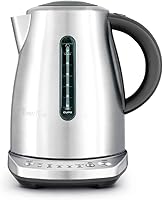
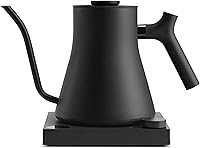
10 Best Electric Kettles (October 2026)
The best best electric kettles for tea and coffee include the Fellow Stagg EKG Pro for daily pour-over drinkers, the Aarke Kettle 1.2L for shared kitchen counters, and the Cosori Gooseneck Kettle 0.8L for solo coffee breaks.
On this page (7 sections)
- How we chose the best electric kettles
- The best electric kettles for different needs
- How to choose an electric kettle for your actual routine
- How to set up and use your new electric kettle
- How to care for an electric kettle without damaging it
- Common electric kettle mistakes to avoid
- Which best electric kettle should you buy?
The best electric kettle for precise pour-over coffee is the Fellow Stagg EKG Pro, our highest-scoring pick for controlled pouring and fine temperature adjustment. For a household jug, choose the Cosori Stainless Temperature Kettle 1.7L; for plain boiling, choose the Breville BKE700 Soft Top Pure.
Your main drink matters more than the longest feature list. A narrow spout helps you guide water over coffee grounds, while a standard jug suits filling mugs, teapots and instant meals.
For help matching heat settings to your drinks, see our electric kettle temperature guide.
Our picks at a glance
-
1
-
2

-
3

- 4
 Best for mixed tea householdsCheck it
- 5
 Check it
OXO Brew Pour Over Gooseneck Kettle
Best for timed brewing routines - 6
 Best for simple everyday boilingCheck it
- 7
 Best for serving several drinkersCheck it
- 8
 Best for unhurried coffee sessionsCheck it
- 9
 Check it
Cosori Stainless Temperature Kettle 1.7L
Best for plastic-conscious households - 10
 Check it
Cuisinart CPK-17P1 Electric Kettle
Best for preset-first tea drinkers
How we chose the best electric kettles
We compared pour style, usable batch size and temperature controls, then considered hold functions, filling access and care. The order reflects those features and their fit for the reader, with coffee-focused models leading for precise brewing.
A lower-ranked jug can still be the better choice for your kitchen. There's little reason to choose a slow-pouring coffee kettle if you mostly need boiling water for breakfast.
Use our electric kettle buying guide for the broader checklist, then compare the practical differences below.
| Product | Best for | Capacity | Temperature | Pour style | Our score |
|---|---|---|---|---|---|
| Fellow Stagg EKG Pro | daily pour-over drinkers | 0.9 L | To-the-degree control | Gooseneck | 8.8 |
| Aarke Kettle 1.2L | shared kitchen counters | 1.2 L | 104°F to 212°F, multiple settings | Standard non-drip spout | 8.6 |
| Cosori Gooseneck Kettle 0.8L | solo coffee breaks | 0.8 L | Five presets | Gooseneck | 8.6 |
| Breville BKE720 Temp Select | mixed tea households | 7 cups | Five settings | Standard jug spout | 8.5 |
| OXO Brew Pour Over Gooseneck Kettle | timed brewing routines | 1 L | 104°F to 212°F, 1-degree increments | Gooseneck | 8.5 |
| Breville BKE700 Soft Top Pure | simple everyday boiling | 1.7 L | Boil only | Standard jug spout | 8.3 |
| Breville BKE820XL IQ Kettle | serving several drinkers | 7 cups | Five presets | Standard jug spout | 8.3 |
| Bonavita 1L Gooseneck Kettle | unhurried coffee sessions | 1 L | 140°F to 208°F, 1-degree adjustments | Gooseneck | 8.2 |
| Cosori Stainless Temperature Kettle 1.7L | plastic-conscious households | 1.7 L | 105°F to 212°F, ±5°F adjustment | Standard kettle spout | 8.1 |
| Cuisinart CPK-17P1 Electric Kettle | preset-first tea drinkers | 1.7 L | 160°F, 175°F, 185°F, 190°F, 200°F and Boil | Standard dripless spout | 8.0 |
The best electric kettles for different needs
Choose a gooseneck for measured brewing or a standard jug for general serving. These profiles explain where each kettle fits and the main reason to choose something else.
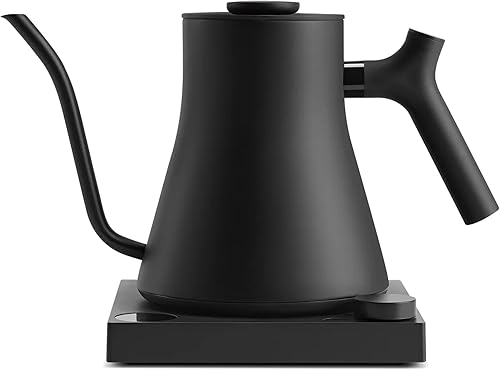
Fellow Stagg EKG Pro: Best for daily pour-over drinkers
- 0.9 L capacity
- To-the-degree temperature control
- Precision gooseneck spout
- High-resolution LCD screen
Choose Fellow when your daily coffee routine calls for a measured stream and fine temperature changes. Its smaller batch size suits focused brewing more than serving a group.
Pros
- Fine temperature adjustment
- Precision spout for controlled flow
- Built-in brew timer
Cons
- Small capacity for group serving
- Narrow spout favors deliberate pouring
The Fellow Stagg EKG Pro suits a daily pour-over routine where you want to change water temperature and guide the stream over a small area. Its to-the-degree control lets you adjust a recipe without moving between fixed presets.
The high-resolution LCD and built-in brew timer keep settings and timing at the kettle. That makes sense if you follow a brewing sequence with a bloom and several pours, rather than emptying all the water at once.
Its 0.9 L capacity works for smaller batches, but remember that rinsing a paper filter also uses water. Plan the whole brew before filling, especially if you warm your serving vessel too.
Skip it if most of your hot water goes into a large teapot or several mugs. Those jobs benefit more from a larger jug than from fine control over the stream.
Aarke Kettle 1.2L: Best for shared kitchen counters
- 1.2 L capacity
- Multiple settings from 104°F to 212°F
- Double-wall construction
- Non-drip spout
A middle-size kettle for households that want temperature choices without a coffee-focused spout. The wide opening and cord winder help with cleaning and counter organization.
Pros
- Double-wall construction
- Memory function
- Wide opening for cleaning
Cons
- Less batch room than full-size models
- Construction includes plastic and silicone
The Aarke Kettle 1.2L is a good fit for a shared kitchen where people want temperature choices without adopting a coffee-specific pouring routine. Its standard non-drip spout suits everyday serving.
Multiple settings span 104°F to 212°F, and the memory function helps with repeat use. Don't confuse a broad range with single-degree selection: choose it because its available settings match your drinks.
Aarke says the double-wall construction helps water retain heat. The wide opening, hidden heating element and removable stainless steel scale filter also give you useful access for routine care.
The middle-size jug is worth considering if a small brewing kettle feels restrictive but a full-size household model is unnecessary. Skip it if avoiding plastic throughout the kettle is your priority, because its construction includes polypropylene and silicone.
Cosori Gooseneck Kettle 0.8L: Best for solo coffee breaks
- 0.8 L capacity
- Five temperature presets
- Up to 1-hour keep warm
- Stainless steel interior, lid and spout
A small-batch choice for coffee drinkers who prefer preset buttons to manual temperature selection. The long hold window suits a second drink later in the hour.
Pros
- One-touch temperature choices
- Up to 1-hour keep warm
- Ready tone can be muted
Cons
- Smallest capacity here
- Fixed presets rather than single-degree selection
The Cosori Gooseneck Kettle 0.8L suits a solo coffee drinker who wants preset buttons and a controlled stream. You can choose a familiar setting without dialing in a temperature for every brew.
Its up-to-1-hour hold window fits a routine where your second drink comes later. Cosori specifies temperature control within 5°F of the selected setting, so choose a single-degree model if you want finer setting choices.
The interior, lid and spout are 304 stainless steel. You can also mute the ready tone by holding HOLD TEMP for 8 seconds, which is useful when you make an early drink near other people.
Skip it for frequent group serving, since this is the smallest kettle here. Small capacity also doesn't guarantee a small footprint: leave room for the projecting spout and handle when planning its counter position.
Breville BKE720 Temp Select: Best for mixed tea households
- Seven-cup capacity
- Five temperature settings
- 20-minute keep warm
- Cordless jug with 360-degree base
A larger jug for households switching between tea varieties and French press coffee. One-touch settings suit shared use without fine manual adjustments.
Pros
- Tea and coffee presets
- Soft-opening lid
- Base includes cord storage
Cons
- Hold window is shorter than some alternatives
- No degree-by-degree temperature selection
The Breville BKE720 Temp Select suits households where one person makes green tea and another makes French press coffee. Its five one-touch settings simplify switching between those routines.
The seven-cup jug makes more sense for shared drinks than a compact brewing kettle. Its 20-minute keep-warm function covers a short gap while you prepare breakfast or finish setting out cups.
Breville says the soft-top lid releases steam gently and helps reduce splashing. Let steam clear before refilling, and use the lid release with the kettle upright rather than tilted toward you.
Choose this model when a larger jug and preset choices solve your daily needs. Skip it if you want to tune temperatures in small steps or leave a long gap between drinks, since the controls and hold window favor a simpler routine.
OXO Brew Pour Over Gooseneck Kettle: Best for timed brewing routines
- 1 L capacity
- Temperature control in 1-degree increments
- Up to 30-minute hold
- Built-in brew timer
Choose OXO when you want to manage water temperature and elapsed brew time at the kettle. Its controlled stream suits measured pours over coffee grounds.
Pros
- Single-degree temperature selection
- Count-up brew timer
- Cool-touch handle
Cons
- Less batch room than household jugs
- Specialized spout for slower pouring
The OXO Brew Pour Over Gooseneck Kettle suits coffee drinkers who want temperature selection and a count-up timer in one place. It lets you track elapsed brewing time while managing a controlled pour.
You can select temperatures in 1-degree increments from 104°F to 212°F. That range also makes it useful for tea drinkers whose recipes call for water below the lowest setting on some preset kettles.
The balanced design and cool-touch handle support pouring control, while the 1 L vessel gives you room for brewing and some preparation water. Its hold window lasts up to 30 minutes, followed by automatic shutoff.
Choose OXO if you regularly follow timed recipes and want fine heat adjustment. Skip it if you mostly fill a large teapot, since a standard jug better matches that serving job.
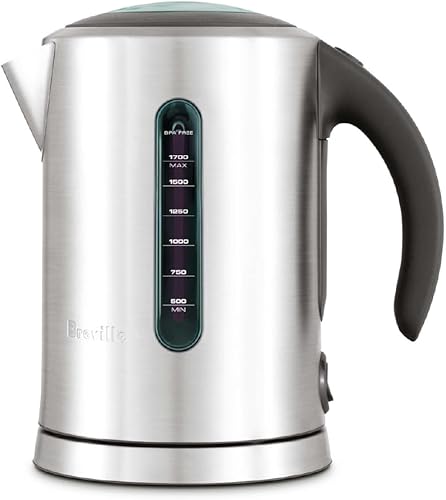
Breville BKE700 Soft Top Pure: Best for simple everyday boiling
- 1.7 L capacity
- Soft-opening lid
- Dual water windows
- Cordless jug
The straightforward choice for boiling water for mugs and instant foods. Dual water windows help you fill for the batch you need without sorting through temperature menus.
Pros
- Simple illuminated power control
- Water level visible from both sides
- Soft grip handle
Cons
- No selectable brewing temperatures
- No keep-warm setting
The Breville BKE700 Soft Top Pure is the clear choice here for people who mainly want boiling water without temperature menus. Use it for drinks and instant foods whose directions call for a full boil.
Its 1.7 L capacity suits several servings, while dual water windows help you avoid filling the jug to maximum out of habit. Measure for your actual batch to reduce leftover hot water.
The illuminated power control, soft grip handle and lid release keep the routine straightforward. Breville says the soft-opening lid helps manage steam release and reduce splashing.
Skip this kettle if you often brew drinks that need a lower target temperature. Waiting for boiled water to cool can work, but a selectable-temperature kettle removes that extra step and makes repeat recipes easier to follow.
Breville BKE820XL IQ Kettle: Best for serving several drinkers
- Seven-cup capacity
- Five preset settings
- 20-minute keep warm
- Boil-dry protection
A batch-serving option with preset temperatures for tea and French press coffee. Its short hold window fits drinks prepared together rather than spread across an hour.
Pros
- Room for multiple drinks
- One-touch preset controls
- Auto shutoff and boil-dry protection
Cons
- Shorter hold than the hour-long options
- No fine manual temperature adjustment
The Breville BKE820XL IQ Kettle suits several drinks prepared close together, with a seven-cup jug and preset choices for tea and French press coffee. It's a practical shape for filling cups around the kitchen.
Its five settings and 20-minute hold favor a shared breakfast or tea break. If you want another drink much later, you'll get more use from a longer hold window or a fresh heating cycle.
Auto shutoff and boil-dry protection are included. Those features support normal operation, but you should still check the water level before starting and keep the base dry.
The IQ Kettle and Temp Select fill similar roles in this group. Choose the IQ for its preset-led serving routine; skip it if you want a gooseneck stream or fine manual temperature changes.
Bonavita 1L Gooseneck Kettle: Best for unhurried coffee sessions
- 1 L capacity
- 1-degree adjustments from 140°F to 208°F
- Six preset temperatures
- Up to 60-minute hold
Bonavita suits coffee drinkers who want manual adjustment, preset shortcuts and a longer hold window. Check its lower temperature limit if you also prepare drinks needing cooler water.
Pros
- Manual adjustment plus presets
- Up to 60-minute hold
- Controlled gooseneck stream
Cons
- Adjustable range starts at 140°F
- Smaller batches than full-size jugs
The Bonavita 1L Gooseneck Kettle suits someone who wants preset shortcuts plus manual adjustment. Use a preset for your regular brew, then change the target in 1-degree steps when following a different recipe.
Its adjustable range runs from 140°F to 208°F. That lower limit matters if you also prepare drinks that call for cooler water, so compare your actual recipe temperatures before choosing it.
The up-to-60-minute hold is useful when you prepare another coffee later in the same session. The gooseneck spout supports a controlled stream, and the kettle uses 304 stainless steel alongside BPA-free virgin plastics.
Choose Bonavita for a measured coffee routine with room to change settings. Skip it if low-temperature drinks or filling a large household teapot are your main tasks.
Cosori Stainless Temperature Kettle 1.7L: Best for plastic-conscious households
- 1.7 L capacity
- Five one-touch presets
- Adjustable temperature from 105°F to 212°F
- All-metal interior
A full-size choice for households that want temperature options and no plastic touching the water. The wider lid position gives access for refilling and cleaning.
Pros
- All-metal water-contact interior
- Presets plus adjustable temperature
- Mutable alerts and switchable temperature units
Cons
- Coarser adjustment than single-degree controls
- Internal water indicator requires looking inside
The Cosori Stainless Temperature Kettle 1.7L suits a household that wants temperature choices without plastic touching the water. Its all-metal interior is the reason to choose it over a jug selected only for its steel exterior.
Five presets cover common drinks, with ±5°F adjustment across a 105°F to 212°F range. That gives you more choice than fixed presets alone, though it isn't the fine selection offered by single-degree controls.
The lid has 2 opening angles: a smaller position to help limit splashes and a wider position for filling and cleaning. Look inside to read the internal water-level indicator before heating.
Choose it for larger batches and water-contact materials. Skip it if precision placement over coffee grounds is your main concern, since a gooseneck better suits that kind of pouring.
Cuisinart CPK-17P1 Electric Kettle: Best for preset-first tea drinkers
- 1.7 L capacity
- Six preset heat settings
- 30-minute keep warm
- Boil-dry protection and auto shutoff
A preset-led kettle for people who want separate buttons for common tea and coffee temperatures. Its memory feature suits brief trips away from the base while serving.
Pros
- Six preset choices
- 30-minute keep warm
- Two-minute off-base memory
Cons
- No degree-by-degree selection
- Lowest preset is 160°F
The Cuisinart CPK-17P1 suits tea drinkers who want a menu of familiar temperature choices. Its settings are 160°F, 175°F, 185°F, 190°F, 200°F and Boil, so match those options to the drinks you make most.
The 1.7 L jug and 30-minute keep-warm option fit shared tea breaks. A memory feature lets you lift it from the base for 2 minutes without losing its place in the heating process.
A backlit water window helps with filling, and the removable, washable scale filter gives you a separate part to clean. Keep filter care in your routine rather than waiting for visible flakes in a cup.
Skip it if your recipes need temperatures below its lowest preset or exact choices between the buttons. Its strength is quick selection, rather than fine manual adjustment.
How to choose an electric kettle for your actual routine
Start with your normal batch and how you pour it, then choose the controls that serve those jobs. This avoids paying attention to features you'll rarely use while overlooking an awkward daily task.
Which best electric kettle fits your batch size?
Measure your usual serving vessels rather than counting “cups.” Two 350 mL mugs need 700 mL, and a coffee routine may also need water to rinse the filter and warm the brewer.
Leave room within the kettle's maximum fill limit for the whole routine. A small vessel that barely covers the drinks can force a refill between preparation and brewing.
A larger kettle doesn't need to be filled completely every time. Follow its minimum level, then heat only what you need rather than treating maximum capacity as the default.
Consider lifting as well as volume. Water adds weight, so choose a batch you can lift and tilt comfortably; our guide to large and small electric kettles helps you estimate the right size.
Choose presets for repeat drinks or manual control for changing recipes
Presets suit familiar routines; manual control suits recipes you change. If your household makes the same teas each day, clear preset choices can be more useful than a long adjustment range.
Single-degree selection makes sense when you want to change one part of a coffee recipe at a time. It gives you a chosen target, but the water can still cool as it travels through the spout and into a cold vessel.
Follow the tea package or coffee recipe as your starting point. Don't assume every green tea or every roast needs the same temperature.
If you only need boiling water, extra controls add little to your main task. Our guide to variable-temperature kettles explains when adjustable heat earns its place.
Choose a spout for where the water needs to land
A gooseneck helps you place a narrow stream, especially over a small coffee bed. It suits recipes where you pour in stages and want to avoid flooding one spot.
For tea bags, a large teapot or instant soup, that level of placement usually matters less. A standard spout lets you focus on filling the vessel rather than managing a deliberate brewing stream.
You can use either shape for tea or coffee, so choose around your most frequent task. See our gooseneck versus regular kettle guide if your kitchen needs to cover both.
Match keep warm to the gap between drinks
A hold function is useful when water reaches its target before you're ready, or when another drink follows soon. It matters less if you always pour as soon as heating ends.
Think about your routine in minutes rather than choosing the longest option automatically. A short breakfast gap and a second coffee much later are different needs.
Keep warm controls the water in the kettle, not tea steeping in your cup. Remove tea leaves or a tea bag when the drink's directions call for it, even if the kettle is still holding water.
Check water-contact parts and cleaning access
Look at the interior, lid and spout, since a stainless steel exterior doesn't describe every surface water touches. If avoiding plastic contact is your priority, choose a kettle with that construction stated clearly.
A wide opening helps you reach inside during care, while an external water window can make filling easier. An internal indicator keeps the measuring point inside the jug, so you'll need to look down into it.
Material preference doesn't remove the need for cleaning or careful use. Our guide to electric kettles without plastic contact explains what that wording means.
Measure the space around the kettle
Allow room for the handle, spout and lid to move, not just the base to sit. A low cabinet can make refilling awkward even when the kettle fits beneath it.
Position the base on a level counter with space for steam to rise. Keep the cord away from the counter edge and check that the intended outlet is within reach before choosing a permanent spot.
How to set up and use your new electric kettle
Begin with the model's manual, fill limits and first-use rinse instructions. Different controls and lid designs need different steps, even when two kettles look similar.
Wash or rinse the permitted parts as directed, then complete any first-use heating and discard cycle the manual requires. Keep the electrical base and connector out of water.
Fill with the kettle off its base so a spill doesn't run onto the connector. Wipe the exterior dry, close the lid fully and return the jug to its base before starting.
Use plain water unless the manual allows something else. Milk, soup and loose tea can leave residue or interfere with parts designed for heating water.
For pour-over coffee, prepare the brewer and grounds before starting the final heating cycle. Budget water for filter rinsing, then pour slowly enough to keep the stream where you want it.
With tea, choose the water temperature first and manage steeping time separately. Leaving leaves in hot water too long can change the flavor even when the kettle setting is right.
How to care for an electric kettle without damaging it
Remove mineral buildup with the method approved for your model, and clean removable filters separately when directed. Scale can collect even in a stainless steel kettle.
Check inside regularly rather than relying on a fixed calendar. Your water and how often you heat it affect how quickly deposits appear.
Let the kettle cool and unplug it before cleaning. Avoid metal scrapers and harsh abrasives that can damage surfaces, and don't immerse the powered base.
Use the descaler or diluted cleaning solution specified in the manual, with its stated amount and contact time. Rinse thoroughly afterward so the next drink doesn't carry a cleaning taste.
A scale filter catches particles but doesn't replace descaling. Our electric kettle descaling guide explains how to recognize buildup and plan routine care.
Common electric kettle mistakes to avoid
The main mistakes are overfilling, choosing for rare occasions and using controls that don't suit your drinks. A few checks before heating prevent most avoidable annoyances.
- Filling above maximum: Leave the marked space for safe operation rather than squeezing in one more serving.
- Going below minimum: A small drink still needs enough water to meet the kettle's minimum fill requirement.
- Buying too large for daily use: Choose for your normal batch, with occasional refills for guests if needed.
- Assuming more watts guarantees a shorter wait: Water volume and starting temperature also affect heating time.
- Confusing the hold timer with a steep timer: The kettle can hold water while tea in the cup still needs its own timing.
- Opening the lid immediately after boiling: Let steam clear and follow the manual's refilling instructions.
- Choosing by exterior material alone: Check which surfaces touch water if construction is a deciding factor.
Which best electric kettle should you buy?
Choose the Fellow Stagg EKG Pro for a daily pour-over routine where stream placement and fine temperature changes matter. Choose OXO if its adjustment range and count-up timer better match how you follow recipes.
For shared household use, pick the Cosori Stainless Temperature Kettle 1.7L when water-contact materials and adjustable heat lead your decision. Choose the Breville BKE700 Soft Top Pure when the job is simply boiling water.
Tea drinkers should match their usual brewing temperatures to the available buttons before choosing a preset model. Use our best electric kettles with temperature control to narrow that choice.
The best electric kettle is the one that handles your normal batch without adding steps you don't need. If materials are your remaining deciding factor, compare our stainless steel electric kettle picks.
Our top 3 picks at a glance
-
1
-
2
-
3
Frequently asked questions
What is the best electric kettle for most people?
The best electric kettle depends on your main drink: choose Fellow Stagg EKG Pro for precise pour-over coffee, Cosori Stainless Temperature Kettle 1.7L for larger temperature-controlled batches, or Breville BKE700 Soft Top Pure for simple boiling. Start with spout style and batch size before comparing extra controls.
Is variable temperature control useful on an electric kettle?
Temperature control is useful if your tea or coffee recipe calls for water below boiling; presets suit repeat drinks, while single-degree adjustment gives you more room to change a recipe. If you mostly make drinks and instant foods that call for boiling water, a simple boil-only kettle can cover your needs.
How much capacity should an electric kettle have?
Choose enough capacity for your normal batch, including any water used to rinse a coffee filter or warm a pot; two 350 mL mugs need 700 mL before those extras. A larger jug helps with group serving, but you can fill below maximum as long as you meet its minimum.
Are gooseneck kettles only for coffee?
Gooseneck kettles work for tea and other hot drinks, but their main advantage is a narrow, controlled stream for pour-over coffee; choose one when where and how fast you pour matters. A standard spout is usually a better match for filling a teapot or several mugs without a deliberate slow pour.
How long should an electric kettle keep water warm?
Choose a hold window that matches the time between your drinks; a short window covers breakfast preparation, while an hour can suit a later refill. You don't need keep warm if you pour immediately, and the setting holds water temperature rather than controlling how long tea leaves stay in your cup.