9 Best Electric Kettles for Pour Over Coffee (October 2026)
The best electric pour-over kettles include the Fellow Stagg EKG Pro for careful coffee brewers, the OXO Brew Pour Over Gooseneck Kettle for daily coffee routines, and the Breville BKE820XL IQ Kettle for larger households.
On this page (7 sections)
- How we chose electric kettles for pour-over coffee
- The best electric kettles for pour-over coffee
- How to choose the best electric kettle for pour over
- How should you set up an electric pour-over kettle?
- Which kettle mistakes can spoil a pour-over routine?
- How do you care for a pour-over electric kettle?
- Which electric kettle should you choose for pour-over coffee?
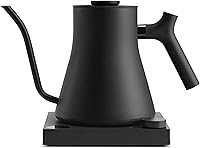
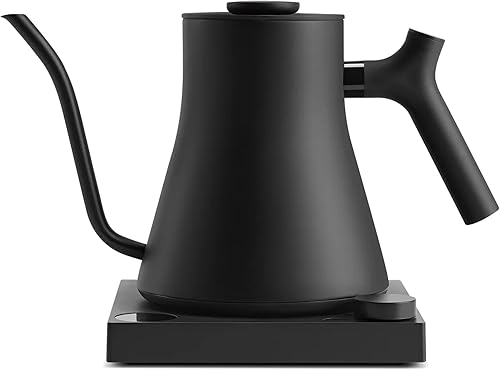
The best electric kettle for pour over is the Fellow Stagg EKG Pro if coffee is your main focus. Its precision gooseneck and fine temperature control suit slow, repeatable pours.
Choose the OXO Brew Pour Over Gooseneck Kettle for a daily routine with built-in timing. Larger jug models make more sense when you regularly heat water for several drinks and care less about a narrow stream.
For more spout-focused options, see our guide to the best gooseneck electric kettles. Our guide to whether you need a gooseneck kettle helps you decide whether that shape is worth making room for.
Our picks at a glance
-
1
-
2
 Best for daily coffee routines
OXO Brew Pour Over Gooseneck Kettle
8.5/10 our score
See it on Amazon -
3

- 4
 Best for unhurried morning brewsCheck it
- 5
 Check it
Cocinare FLOW B9 Gooseneck Kettle
Best for coffee and tea drinkers - 6
 Check it
OXO Brew Adjustable Temperature Kettle
Best for shared kitchen counters - 7
 Check it
Breville BKE845 Smart Kettle Luxe
Best for tea-first households - 8
 Best for varied hot drinksCheck it
- 9
 Check it
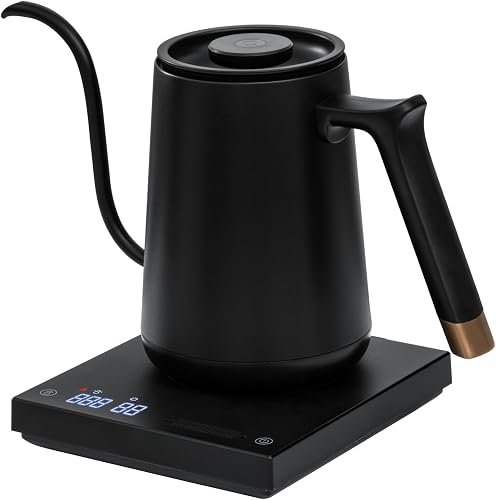
Timemore Fish Smart Kettle 600ml
Best for solo coffee drinkers
How we chose electric kettles for pour-over coffee
Pour control comes first, followed by temperature adjustment, usable capacity and controls that fit a daily brewing routine. We compared these features to separate dedicated coffee kettles from general hot-water jugs.
A narrow spout matters because pouring changes how water moves through the grounds. A larger jug earns its place when the same kettle must serve tea drinkers, fill a French press or supply several mugs.
Scores reflect each kettle's fit for those needs. For a broader view of styles beyond pour-over, see our best electric kettles guide.
| Product | Best for | Capacity | Spout | Temperature control | Our score |
|---|---|---|---|---|---|
| Fellow Stagg EKG Pro | careful coffee brewers | 0.9 liters | Gooseneck | To the degree | 8.8 |
| OXO Brew Pour Over Gooseneck Kettle | daily coffee routines | 1 liter | 104°F to 212°F in 1-degree steps | 8.5 | |
| Breville BKE820XL IQ Kettle | larger households | 1.8 liters | 5 preset settings | 8.3 | |
| Bonavita 1L Gooseneck Kettle | unhurried morning brews | 1 liter | 140°F to 208°F in 1-degree steps | 8.2 | |
| Cocinare FLOW B9 Gooseneck Kettle | coffee and tea drinkers | 0.9 liters | 8.0 | ||
| OXO Brew Adjustable Temperature Kettle | shared kitchen counters | 1.75 liters | Adjustable with a dial | 8.0 | |
| Breville BKE845 Smart Kettle Luxe | tea-first households | 7 cups | 5 preset settings | 7.9 | |
| Fellow Corvo EKG Pro | varied hot drinks | 0.9 liters | Wide spout | To the degree | 7.6 |
| Timemore Fish Smart Kettle 600ml | solo coffee drinkers | 600 ml nominal; about 560 ml maximum fill | 40°C to 100°C | 7.6 |
The best electric kettles for pour-over coffee
The Stagg EKG Pro is the first choice for dedicated pour-over brewing. The alternatives below make sense when your priorities shift toward longer holds, smaller servings, visible water levels or shared kitchen use.
Fellow Stagg EKG Pro: Best for careful coffee brewers
- 0.9-liter capacity
- Gooseneck spout
- To-the-degree temperature control
- High-resolution LCD
A focused choice for daily pour-over brewing, with a precision spout for guiding water and fine temperature adjustment for repeating recipes.
Pros
- Precision gooseneck spout
- To-the-degree temperature adjustment
- Built-in brew timer
Cons
- Less capacity than the larger jug models
- Hand wash only
Buy the Stagg if you want your kettle to support a repeatable coffee recipe. Its gooseneck gives you a narrow stream to aim at the grounds, while to-the-degree adjustment lets you return to a chosen water temperature.
The 0.9-liter capacity gives a single-serving brewer room for coffee water and preparation without moving to a large household jug. The high-resolution LCD and built-in brew timer keep key parts of the routine at the kettle.
It suits someone who measures coffee and water and wants to refine pouring pace. Start with one recipe, keep the temperature fixed and practice making the same gentle circles before changing other variables.
Skip it if your main task is filling several mugs quickly. The gooseneck's purpose is careful delivery, and a larger jug is a better match when serving volume matters most.
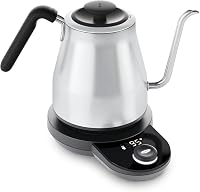
OXO Brew Pour Over Gooseneck Kettle: Best for daily coffee routines
- 1-liter capacity
- Temperature control in 1-degree steps
- Up to 30-minute hold
- Integrated brew timer
A gooseneck kettle for repeatable daily brewing, with an integrated timer and a cool-touch handle for guiding the pour.
Pros
- Controlled gooseneck stream
- Built-in count-up timer
- Cool-touch handle
Cons
- Less capacity than the larger jug models
- Hand wash only
Choose the OXO gooseneck if you want temperature, timing and pouring controls in one daily coffee station. Its count-up brew timer helps you follow bloom and pour intervals without reaching for a phone.
Temperature adjustment spans 104°F to 212°F in 1-degree steps, and the kettle holds your setting for up to 30 minutes. That gives you time to rinse the filter, weigh beans and finish grinding after heating begins.
The balanced design and cool-touch handle suit a routine built around slow pours. Its 1-liter capacity also leaves more room than the smallest pick for preparation water.
Skip it if you need a long holding window across separate morning drinks, or enough water for a larger household in one fill. Our OXO Brew gooseneck kettle review gives this option a closer look.
Breville BKE820XL IQ Kettle: Best for larger households
- 1.8-liter capacity
- 5 preset temperature settings
- 20-minute keep-warm
- Cordless jug
A larger jug for households heating water for several drinks, with preset buttons instead of degree-by-degree adjustment.
Pros
- More capacity than the gooseneck picks
- One-touch temperature presets
- Soft-opening lid
Cons
- Jug spout is less suited to slow pour-over work
- No custom degree-by-degree setting
Choose the Breville IQ when the kettle serves several people and pour-over is only one task. Its 1.8-liter jug puts water volume ahead of the narrow stream offered by the dedicated coffee models.
The 5 presets cover several tea types and French press coffee, so you can choose a familiar drink setting instead of adjusting individual degrees. Keep-warm runs for 20 minutes, and the soft-opening lid releases steam gradually.
This is a sensible household choice if you often heat water for coffee while someone else makes tea. You can make pour-over with it, but start with a gentle tilt and smaller additions to avoid flooding the grounds.
Skip it if your recipe calls for a custom temperature or several carefully paced pours. Those are strong reasons to choose a gooseneck with manual adjustment instead.
Bonavita 1L Gooseneck Kettle: Best for unhurried morning brews
- 1-liter capacity
- Temperature adjustment in 1-degree steps
- 6 preset temperatures
- Up to 60-minute hold
A gooseneck option for brewing across a longer morning, with both preset shortcuts and manual temperature adjustment.
Pros
- Gooseneck spout for controlled pouring
- Preset and manual temperature options
- Up to 60-minute hold
Cons
- Selectable temperature range starts at 140°F
- Hand wash only
Choose the Bonavita if you prepare coffee in stages and want water ready while the rest of the morning moves around you. Its hold setting runs for up to 60 minutes, useful for separate brews rather than one immediate pour.
You can choose from 6 presets or adjust in 1-degree steps from 140°F to 208°F. That lets a household use familiar shortcuts while a coffee brewer keeps a specific recipe temperature.
The gooseneck and ergonomic handle suit controlled pours, and the 1-liter size leaves room for a rinse alongside many single-serving recipes. It fits someone who wants manual control without giving up preset buttons.
Skip it if you need selectable temperatures below its lower limit for other drinks. Also consider a larger jug if your routine involves filling multiple serving vessels before anyone starts brewing.
Cocinare FLOW B9 Gooseneck Kettle: Best for coffee and tea drinkers
- 0.9-liter capacity
- Temperature adjustment in 1°F steps
- Built-in brew timer
- 60-minute keep-warm
A gooseneck kettle for switching between drinks, with temperature and brew time visible together and a stainless steel interior.
Pros
- Temperature and timer visible together
- No plastic water contact
- 60-minute keep-warm
Cons
- Less capacity than the larger jug models
- Hand wash only
Choose the Cocinare if you move between coffee and tea and want to see temperature and brew time together. The display supports tracking a recipe without switching your attention between separate devices.
It adjusts in 1°F steps and holds water warm for up to 60 minutes. The S-shaped gooseneck suits careful coffee pours, while the timer also helps you track tea steeping.
Cocinare specifies a food-grade 304 stainless steel interior with no plastic touching the water. That makes it a relevant choice if water-contact materials are part of your buying decision, alongside the controls.
Its 0.9-liter size suits a personal drink routine more than serving a group. Skip it if you regularly run short after rinsing a filter and preparing several cups, or prefer a wide spout for quickly filling larger vessels.
OXO Brew Adjustable Temperature Kettle: Best for shared kitchen counters
- 1.75-liter capacity
- Adjustable temperature control
- 30-minute hold
- Borosilicate glass body
A large glass kettle for several hot-water tasks, with visible water levels, measurement markings and a temperature dial.
Pros
- Large water capacity
- Visible water level with ounce and milliliter markings
- Removable stainless steel filter
Cons
- No gooseneck for narrow pours
- Tall body needs clearance beneath cabinets
Choose this OXO if several people share the kettle and want to see the water level at a glance. The glass body and ounce and milliliter markings help you judge the fill before switching it on.
Its 1.75-liter capacity suits several drinks, while a dial handles temperature selection. A 30-minute hold gives you time between heating and serving, and the removable stainless steel filter can be taken out for cleaning.
This is a practical fit when coffee shares counter space with tea and other hot-water tasks. The wide opening also gives access for filling and cleaning inside the vessel.
Skip it if slow, narrow pours are central to your recipe. Measure overhead clearance too: the kettle is 13.5 inches tall, and you'll need space to open the lid and fill it comfortably.
Breville BKE845 Smart Kettle Luxe: Best for tea-first households
- 7-cup capacity
- 5 temperature settings
- 20-minute keep-warm
- Soft-opening lid
A preset jug for households making several kinds of tea and occasional coffee, rather than focusing on slow pour-over technique.
Pros
- One-touch drink settings
- Dual-sided water windows
- Soft-opening lid
Cons
- Jug spout favors serving over precise pour-over work
- No custom degree-by-degree setting
Choose the Smart Kettle Luxe for a household that mainly wants tea presets and makes pour-over occasionally. Its one-touch drink settings favor a simple shared routine over custom coffee temperature changes.
The 7-cup jug has settings for black, green, white and oolong tea, plus French press coffee. A 20-minute keep-warm window helps when people prepare their drinks at slightly different times.
Dual-sided water windows help you check the fill, and the soft-opening lid releases steam gradually. The cordless jug lifts from a 360-degree base, useful when returning it from different directions on a shared counter.
Skip it if you're buying mainly to improve control over the coffee bed. It fills much the same role as the IQ Kettle above, so choose between them around the household features you value rather than expecting a gooseneck-style pour.
Fellow Corvo EKG Pro: Best for varied hot drinks
- 0.9-liter capacity
- To-the-degree temperature control
- Wide spout
- Scheduling and hold settings
A compact, wide-spout kettle for tea, immersion coffee and other hot-water tasks, with precise temperature settings and scheduling.
Pros
- To-the-degree temperature control
- Scheduling and adjustable hold mode
- Brew stopwatch and drink presets
Cons
- Wide spout is less suited to slow pour-over work
- Hand wash only
Choose the Corvo if precise water temperature matters across several drinks, but slow coffee pouring is a secondary need. Its wide spout suits filling a mug or an immersion brewer more directly than tracing small circles over a filter.
To-the-degree control, scheduling and adjustable hold settings let you shape the heating routine. Guide Mode offers drink presets, while a brew stopwatch helps you track steeping.
The 0.9-liter body suits personal servings rather than supplying a group. It makes sense for someone who wants coffee, tea and hot water for food from one compact kettle.
Skip it if pour-over is the main reason you're replacing your current kettle. A wide spout still requires careful tilt control for small additions, so the Stagg is the more focused choice for that job.
Timemore Fish Smart Kettle 600ml: Best for solo coffee drinkers
- 600 ml nominal capacity
- Temperature control from 40°C to 100°C
- Gooseneck spout
- 1000-watt home edition
A small gooseneck for single-serving coffee routines, with separate readings for the target and actual water temperature.
Pros
- Small body for a dedicated coffee station
- Fine gooseneck stream
- Target and actual temperature display
Cons
- Maximum fill is about 560 ml
- Limited room for brewing plus filter rinsing
Choose the Timemore for a solo coffee station where a small vessel matches your usual recipe. Its maximum fill is about 560 ml, so work from that limit rather than the 600 ml model name.
For example, a brew using 300 ml plus a 100 ml filter rinse fits within that amount. A larger recipe can leave little room for preparation water, so total your needs before choosing it.
The fine gooseneck supports a narrow stream, and the display shows target and actual temperature together. Its control range spans 40°C to 100°C, with a 1000-watt home-edition base.
Skip it if you often brew for a second person or use a large rinse. TIMEMORE's home and commercial heating bases aren't interchangeable, so keep this kettle paired with its own base rather than treating the versions as mix-and-match parts.
How to choose the best electric kettle for pour over
Choose by pouring style, total water needs and control preferences, in that order. Extra screen options won't solve a spout that fights your recipe or a vessel that runs out halfway through preparation.
Which electric pour-over kettle spout suits your recipe?
A gooseneck is the better choice for recipes with small pulses, slow circles or a careful bloom. You control where the stream lands without tipping a broad jug far enough to release a large surge.
A regular spout can suit occasional pour-over, especially when the kettle mostly serves other drinks. Keep the stream gentle and avoid pouring against the filter walls, where water can travel around the grounds.
Neither shape controls the brew for you. A steady hand, sensible pouring height and repeatable pace matter more than making elaborate circles.
How much water will your whole routine use?
Add brewing water, filter-rinse water and vessel-preheating water before choosing capacity. A recipe's finished drink size isn't the full amount you'll need because the grounds retain some water.
For example, 500 ml for brewing and 150 ml for preparation require 650 ml before you allow for another drink. That routine needs more usable room than the smallest kettle here offers.
Check minimum fill requirements in the manual too. A larger kettle may be unnecessary if your daily recipe is small, while filling any kettle above its maximum line creates a spill risk.
Do you want precise settings or preset buttons?
Choose manual adjustment if you follow recipes with specific temperatures or regularly change coffees. Presets suit someone who wants a familiar button and rarely changes the brewing method.
Small adjustment steps and temperature accuracy are different things. A control that moves by 1 degree lets you select a target finely; it doesn't mean the water stays perfectly fixed throughout pouring.
A useful starting range for coffee is about 195°F to 205°F. Follow your roaster's recipe first, then make small changes while keeping the rest of the brew steady.
Will hold mode or a timer change your routine?
Hold mode helps when you prepare equipment after heating or make separate drinks over time. If you brew as soon as the kettle is ready, a long hold adds little to that routine.
A built-in timer is useful if it replaces reaching for another device. If your coffee scale already has one, choose a single timer to follow so bloom and total brew time stay clear.
Measure the whole coffee station before buying. Leave room for the base, a clear pouring path, lid access and a safe place to put the hot kettle down.
How should you set up an electric pour-over kettle?
Start with a clean kettle, a stable counter and one simple recipe. Read the manual for first-use rinsing, minimum fill, electrical requirements and how the hold controls work.
- Place the base on a dry, level surface with space for steam to escape.
- Fill within the marked limits, keeping the underside and electrical contacts dry.
- Put the brewer and cup or server on a scale before you heat the water.
- Choose a recipe temperature, rinse the filter and discard that rinse water.
- Add the measured grounds, start one timer and follow the recipe's pour stages.
For early brews, keep the spout fairly close to the coffee bed without touching the brewer. Pouring from too high can splash and disturb the grounds more than intended.
Practice the tilt with cool water over a sink if controlling the stream feels awkward. Aim for a steady flow you can start and stop without a sudden surge.
Record the coffee dose, water amount, grind setting, temperature and total brew time. Those notes help you repeat a good cup and identify one useful change for the next brew.
Which kettle mistakes can spoil a pour-over routine?
The biggest mistakes are running short of water and changing too many variables at once. A more precise kettle helps you control the process, but it can't choose the recipe or grind for you.
Heating only the recipe amount
Allow water for the rinse before heating. Discovering that you're short during the main pour forces a refill and interrupts the recipe.
Don't solve that problem by overfilling. Choose enough capacity for the complete routine and respect the maximum mark.
Pouring faster to finish on time
Use brew time as feedback rather than a reason to dump water onto the grounds. If the brewer drains slowly, forcing a larger pour can raise the water level without fixing the cause.
Keep a steady pace and review grind size, dose and filter choice before the next cup. Change one factor so the result teaches you something useful.
Treating hotter water as the answer to every weak cup
Check the coffee-to-water ratio and grind before raising the temperature. A weak drink may simply need a different dose or less water.
If the cup tastes harsh, try a small temperature reduction while leaving the other settings alone. Taste can guide the next step, but no single flavor proves that temperature caused the problem.
Assuming the display measures the coffee slurry
The display refers to water in the kettle, not the mixture inside the brewer. Water loses heat during transfer, and the filter, grounds and vessel affect brewing temperature.
Preheat consistently rather than chasing each small display change. A repeatable routine gives temperature adjustments meaning.
How do you care for a pour-over electric kettle?
Remove mineral buildup and keep the electrical base dry to maintain a clean brewing routine. Scale collects as minerals remain behind after water heats and evaporates.
Check inside regularly and descale when deposits appear, using the method and cleaner allowed by the kettle's manual. Hard-water areas may need more frequent care than places with softer water.
Don't choose an acid strength or soak time by guesswork. Our guide to descaling an electric kettle explains the process and the precautions around rinsing.
After descaling, rinse thoroughly and complete any fresh-water cycles required by the instructions. Don't brew coffee until cleaning residue and odor are gone.
Wipe the outside gently and avoid scraping deposits with metal tools. Never immerse the base, and follow the manual for which removable parts can be washed separately.
Heat plain water in the kettle and brew coffee or loose tea in a separate vessel. This keeps grounds, leaves and drink residue out of the spout and heating chamber.
Which electric kettle should you choose for pour-over coffee?
The best electric kettle for pour over is the one that matches your actual brewing routine. Choose the Stagg for daily coffee precision, the OXO gooseneck for an integrated brewing routine, or Bonavita when a longer hold matters.
Choose Cocinare if seeing brew time and temperature together appeals to you. Pick Timemore only after confirming that your brewing and rinse water fit its usable capacity.
For a shared household, the Breville IQ, Smart Kettle Luxe and glass OXO put serving needs ahead of narrow pouring. Corvo suits a personal routine with varied drinks and occasional pour-over.
If the two leading coffee-focused picks remain on your shortlist, read Fellow Stagg EKG Pro vs OXO Brew Pour Over Kettle. For a routine that also includes several teas, our guide to electric kettles with temperature control covers more styles.
Our top 3 picks at a glance
-
1
-
2
Best for daily coffee routines
OXO Brew Pour Over Gooseneck Kettle
8.5/10 our score
See it on Amazon -
3
Frequently asked questions
Do you need a gooseneck kettle for pour-over coffee?
A gooseneck is helpful, but you can make pour-over coffee with a regular kettle. Its narrow spout makes small, slow pours easier to direct across the grounds; choose one if you brew daily or follow staged recipes; a regular kettle can suit occasional coffee and broader kitchen use.
What temperature should you use for pour-over coffee?
Start around 195°F to 205°F, unless your coffee recipe recommends another temperature. Lighter roasts often suit the hotter end, while darker roasts may taste better with cooler water; keep grind, dose and pouring steady when adjusting temperature so you can tell which change improved the cup.
Is temperature control useful for pour-over coffee?
Temperature control is useful when you want to repeat a recipe or brew different coffees without guessing how far boiled water has cooled. It also helps when switching to tea; you can still brew with a boil-only kettle, but an adjustable setting removes one variable from your routine.
How much capacity do you need in a pour-over kettle?
Choose enough usable capacity for your brewing water, filter rinse and vessel preheating. For example, a recipe using 300 ml of water plus a 100 ml rinse needs at least 400 ml; count extra drinks too, and follow the kettle's maximum fill line rather than relying on its name.