Gooseneck vs Regular Electric Kettle: Which Is Better? (October 2026)
In a gooseneck kettle vs regular comparison, choose a gooseneck for frequent pour-over coffee and a regular kettle for general pouring. Compare capacity and temperature controls separately, since spout shape doesn't determine either.
On this page (11 sections)
- Gooseneck kettle vs regular: which should you choose?
- How does the spout change your pour?
- Which kettle holds enough water for your routine?
- Do temperature controls matter more than spout shape?
- Which one is easier to fill, lift and serve?
- How should you set up and use either kettle?
- What care keeps the spout and kettle clean?
- What mistakes should you avoid when choosing?
- Which kettle should you buy for coffee or tea?
- FAQ
- Pick by the way you pour
In a gooseneck kettle vs regular comparison, choose a gooseneck for frequent pour-over coffee and a regular kettle for general pouring. Then compare water capacity and heating controls separately, because a narrow spout doesn't automatically mean either a smaller kettle or more temperature choices.
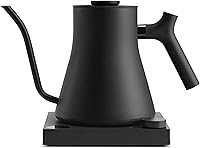
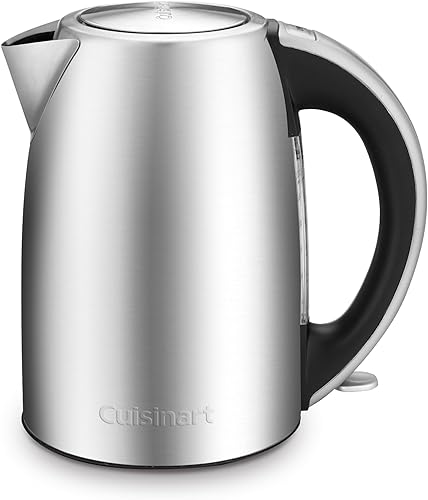
The Cosori suits a deliberate coffee routine with small, directed pours. The Cuisinart suits a shared kitchen where the main job is filling mugs, a teapot or a French press.
Start with the drink you make most often, then check your largest normal batch. That keeps an occasional brewing project from deciding what you use every morning.

Gooseneck kettle vs regular: which should you choose?
Choose a gooseneck for precise water placement and a regular kettle when you mainly need to transfer hot water into a vessel. Neither shape is the better choice for every drink.
Pour-over coffee gives the spout an active role in brewing. You decide where water lands, how quickly it enters the coffee bed and when to pause.
With a French press, tea infuser or hot cocoa, water mostly needs to reach the cup or pot. A narrow stream adds less value because the drink doesn't depend on repeated pours over exposed grounds.
The electric kettle buying guide covers the wider choice, including controls and capacity. For the spout decision alone, read Do You Need a Gooseneck Kettle?.
Gooseneck vs regular kettle: who should skip each?
Skip a gooseneck if you rarely make pour-over and mainly fill large mugs or pots. Its controlled stream can add pouring time to a task that doesn't need much precision.
Skip a basic regular kettle if you brew pour-over daily and struggle to make small, even pours. Also skip either model if its capacity or heating controls don't meet your routine, regardless of its spout.
You don't need to replace a working kettle just to try a dripper. Make a few brews first and see whether controlling the stream is actually the part holding you back.
How does the spout change your pour?
A gooseneck makes it easier to aim a narrow stream and adjust the flow through small changes in tilt. A regular spout can pour gently too, but keeping that flow consistent often takes more care.
For pour-over, this helps you wet dry patches without sending a large rush into one spot. The Cosori's counter-balanced handle is designed to support that controlled movement.
Pour rate also affects how quickly the dripper fills. Adding water faster than it drains can raise the water level more than your recipe calls for, so watch the brewer rather than simply copying a circular motion.
A narrow spout doesn't fix an unsuitable grind or a poor coffee-to-water ratio. Keep those parts steady before changing your pouring pattern, or you won't know what caused a different result.
See the best electric kettles for pour-over coffee if that is your main brewing method. Choose the level of control your recipe needs rather than buying for the shape alone.
Which kettle holds enough water for your routine?
The Cuisinart holds 1.7 L, compared with the Cosori's 0.8 L. The larger model is the stronger fit when several people want drinks together.
Count all the water used during a brew, including rinsing a paper filter and warming a server. The amount poured into the finished drink can be much less than the amount you need at the start.
For example, 2 drinks needing 300 mL each use 600 mL before any rinsing. That leaves less spare water in the smaller kettle than the finished drink sizes might suggest.
Use the largest batch you make regularly as your guide. Buying for a rare gathering can leave you lifting and storing more kettle than you need each day.
A larger kettle doesn't have to be filled completely for every drink. Follow its minimum fill requirement and heat the amount you need, while staying below the maximum line.
For help matching volume to cups and brewing habits, see how big an electric kettle you need.
Do temperature controls matter more than spout shape?
Temperature controls can matter more for tea, while spout control matters more during pour-over. Treat them as separate buying decisions rather than assuming all goosenecks offer the same heating options.
The Cosori has 5 temperature presets and can keep water warm for up to 1 hour. That suits someone who wants a repeatable setting or makes drinks at different times.
Presets give you a fixed set of choices, not every possible temperature. If your tea or coffee routine calls for a particular setting, make sure a kettle's controls cover it.
The Cuisinart uses an on/off switch for straightforward boiling. Choose it when boiling water is your normal starting point; choose a temperature-control model if you want to avoid a separate cooling step.
Don't use a fixed waiting time after boiling as an exact temperature measure. Water cools at different rates depending on the amount, kettle and room conditions.
Read what variable temperature means on a kettle to compare control types. Our guide to electric kettles with temperature control covers more choices if neither model fits.
Which one is easier to fill, lift and serve?
The Cuisinart favors shared daily use, while the Cosori favors a more measured brewing routine. Check the full pouring motion, not just how either kettle looks on its base.
The Cuisinart has a lid-release button, a backlit water window with level marks and a 360° swivel base. Its dripless spout includes a splash guard, and Cuisinart describes the handle as stay-cool and nonslip.
Those features suit a kitchen where different people fill and return the kettle throughout the day. Auto shutoff and boil-dry protection are also part of this model.
The Cosori has a ready tone that beeps 3 times when it reaches a preset. Hold the HOLD TEMP button for 8 seconds to silence it if the sound would disturb others.
Allow space for the Cosori's projecting spout when choosing a counter position. Measure the whole kettle and leave room to lift it without catching the spout on nearby items.
Both have stainless steel interiors; the Cosori also has a food-grade 304 stainless steel lid and spout. Material alone shouldn't decide the purchase if the kettle is awkward for your normal fill-and-pour routine.
How should you set up and use either kettle?
Put the base on a dry, level counter with room above the kettle for steam and lid access. Keep the cord away from the counter edge and position the spout where people won't brush against it.
Before first use, follow the model's cleaning and rinse instructions. Fill with the kettle off its base, then dry its outside and the electrical contact area before returning it.
For the Cosori, add at least 118 mL of water and stay below the MAX line. Use the Cuisinart's own fill markings and instructions rather than borrowing the other model's minimum.
Set your brewer, mug and any scale in place before heating. This reduces the need to move a hot kettle while clearing space or searching for a filter.
For pour-over, begin with a gentle tilt and a short distance between the spout and coffee bed. Keep the spout clear of the brewer and avoid pouring from so high that the stream splashes.
With a regular kettle, use small additions if the dripper starts filling too quickly. For a teapot or French press, pour steadily and leave enough headroom to avoid overflow.
What care keeps the spout and kettle clean?
Remove mineral buildup and clean accessible parts regularly, especially if deposits become visible. A spout filter catches loose scale but doesn't remove deposits from the kettle itself.
Both models call for hand washing. Unplug the base before cleaning, let the kettle cool and keep electrical parts out of water.
The Cuisinart's removable scale filter can be cleaned separately. Follow its care instructions, and don't force tools into the spout or around the filter mounting.
A gooseneck's narrow tube is harder to reach than a broad opening. Use the approved descaling method and thorough rinsing rather than pushing a sharp object or unsuitable brush through it.
Choose a descaling schedule based on visible buildup and your water, rather than assuming every kitchen needs the same interval. Our guide to descaling an electric kettle explains the process and rinse steps.
What mistakes should you avoid when choosing?
The biggest mistake is buying the spout and ignoring the routine. A kettle can pour precisely yet still be too small for breakfast or lack the heating settings your tea needs.
Don't read wattage as a complete speed comparison. The Cuisinart has 1500 W and the Cosori has 1200 W, but water volume and starting temperature also affect heating time.
Avoid comparing a full large kettle with a partly filled small one and treating the result as a fair speed judgment. For daily convenience, how much water you actually heat matters.
Don't expect a new kettle to solve every pour-over problem. If water drains too slowly, check the grind, filter and recipe before assuming the spout is at fault.
Finally, don't fill above the maximum mark to avoid another heating cycle. Choose more capacity if you regularly need extra water rather than stretching a smaller kettle beyond its fill limit.
Which kettle should you buy for coffee or tea?
Buy the Cosori for frequent pour-over and preset heating; buy the Cuisinart for larger rounds of drinks and simple boiling. Choose based on the task you repeat most often.
For French press coffee, the regular spout is a sensible fit because the grounds steep in the water. A gooseneck can fill the press, but controlled pulses aren't central to that method.
For tea, first check the tea's brewing instructions. Lower-temperature brewing makes heating controls useful, while a full teapot makes capacity more important.
If tea leads your routine, start with the guide to choosing an electric kettle for tea. If daily dripper coffee leads it, compare our guide to the best gooseneck electric kettles.
FAQ
Brewing method should guide the spout choice, while batch size and heating settings guide the model. These answers address the remaining differences.
Is a gooseneck kettle better than a regular kettle?
A gooseneck kettle is better for directing small pours over coffee grounds. A regular kettle suits filling mugs, teapots and immersion brewers without the same need for precision.
Choose the spout for your brewing method, then compare capacity and heating controls as separate features.
Can you use a regular kettle for pour-over coffee?
Yes, a regular kettle can make pour-over coffee if you pour gently and avoid flooding the dripper. Keep the spout close enough to aim safely, add water in small amounts and watch the water level.
A gooseneck becomes useful when repeating that controlled flow is difficult.
Does a gooseneck kettle hold less water?
No, spout shape doesn't set a kettle's capacity, though these 2 models differ in size. Count the water needed for your drink, filter rinse and any extra servings before choosing.
A kettle that barely covers the finished drink may leave too little water for the full brewing routine.
Do you need temperature control for pour-over coffee?
No, temperature control is optional for pour-over coffee, but it makes a chosen heat setting easier to repeat. It helps most when you change coffees or also brew tea below boiling.
Our guide to variable-temperature kettles explains how presets differ from adjustable settings.
Which kettle is better for tea?
Choose temperature controls for teas that call for water below boiling, and enough capacity for your usual pot or round of mugs. A narrow spout isn't essential for steeping tea.
Between these models, the Cosori favors preset heating, while the Cuisinart favors serving more people.
Pick by the way you pour
Decide the gooseneck kettle vs regular choice by your busiest daily use: repeated small pours favor the Cosori, while filling several cups or a larger brewer favors the Cuisinart. If you already own a regular kettle, try your pour-over routine before replacing it.
For a broader comparison of heat sources, read electric kettle vs stovetop kettle. If you have settled on a dripper, continue with the best electric kettles for pour-over and match the kettle to the full brew, including rinse water.
Frequently asked questions
Is a gooseneck kettle better than a regular kettle?
A gooseneck kettle is better for directing small pours over coffee grounds; a regular kettle suits filling mugs, teapots and immersion brewers without the same need for precision. Choose the spout for your brewing method, then compare capacity and heating controls as separate features.
Can you use a regular kettle for pour-over coffee?
Yes, a regular kettle can make pour-over coffee if you pour gently and avoid flooding the dripper. Keep the spout close enough to aim safely, add water in small amounts and watch the water level; a gooseneck becomes useful when repeating that controlled flow is difficult.
Does a gooseneck kettle hold less water?
No, spout shape doesn't set a kettle's capacity, though these 2 models differ in size. Count the water needed for your drink, filter rinse and any extra servings before choosing; a kettle that barely covers the finished drink may leave too little water for the full brewing routine.
Do you need temperature control for pour-over coffee?
No, temperature control is optional for pour-over coffee, but it makes a chosen heat setting easier to repeat. It helps most when you change coffees or also brew tea below boiling; our guide to variable-temperature kettles explains how presets differ from adjustable settings.
Which kettle is better for tea?
Choose temperature controls for teas that call for water below boiling, and enough capacity for your usual pot or round of mugs. A narrow spout isn't essential for steeping tea; between these models, the Cosori favors preset heating, while the Cuisinart favors serving more people.