Do You Need a Gooseneck Kettle?
You don't need a gooseneck kettle for every drink, but its controlled stream helps with regular pour-over coffee brewing. For tea, instant drinks, and French press coffee, a regular kettle usually does the job.
On this page (7 sections)
- When do you need a gooseneck kettle?
- When is a regular kettle enough?
- Does temperature control matter more than the spout?
- How should you choose capacity and counter space?
- How do you set up and use a gooseneck kettle?
- What mistakes and care habits matter most?
- Which kettle should you choose for your routine?
You don't need a gooseneck kettle for every drink, but its controlled stream helps with regular pour-over coffee brewing. For tea, instant drinks, and French press coffee, a regular kettle usually does the job.
The question isn't whether a narrow spout can make coffee better by itself. It's whether easier control over water flow solves a problem in the way you brew.
When do you need a gooseneck kettle?
A gooseneck kettle makes sense when you regularly brew pour-over coffee and want to control where water lands and how quickly it reaches the grounds. Its narrow spout makes small changes in flow easier to manage.
With a manual dripper, you may need to wet the grounds gently, pause, then add water in measured pours. A heavy stream can disturb the coffee bed or raise the water level faster than you intended.
A gooseneck helps you repeat those steps, but it doesn't choose the recipe for you. Coffee dose, grind size, water temperature, and total brew time still affect the cup.
Our guide to electric kettles for pour-over coffee compares options for that brewing method. For the wider trade-offs between spout styles, see gooseneck versus regular kettles.
Do you need a gooseneck kettle as a beginner?
Start with the kettle you have if you're still deciding whether you enjoy pour-over. Learn to weigh your coffee and water, follow one recipe, and notice which part of the process is hard to repeat.
Buy a gooseneck when the stream keeps rushing out or landing outside your target area. If your current kettle already gives you a manageable pour, a new spout can wait.
When is a regular kettle enough?
A regular kettle is enough for tea, instant drinks, hot cocoa, and French press coffee because these methods don't require carefully placed pours over an exposed coffee bed. Capacity and easy filling often matter more.
The Cuisinart JK-17P1 Cordless Kettle suits households that need one kettle for several drinks. Its 1.7-liter capacity gives it more room than either gooseneck here, while the marked water window helps you judge a fill.
Its removable scale filter can be washed, and Cuisinart includes automatic shutoff and boil-dry protection. The swivel base also lets you return the kettle from different angles.
Skip this model if you want selectable brewing temperatures or fine control over a narrow stream. Its simple on/off operation suits boiling water rather than choosing a lower temperature on the kettle.
If you only make pour-over on weekends, try gentle, short pours with your current kettle before adding another appliance. A regular spout can work if you can keep the flow steady.
For broader buying help, use our electric kettle buying guide. Tea drinkers can focus on the features covered in how to choose an electric kettle for tea.
Does temperature control matter more than the spout?
Temperature control and spout shape solve different problems: one sets how hot the water gets, while the other helps you direct it. Choose them separately rather than assuming every gooseneck offers adjustable heat.
Temperature settings are useful when you switch between drinks with different brewing needs. Start with the directions for your tea or coffee, then change one part of the recipe at a time.
Cosori for simple presets and smaller batches
The Cosori Gooseneck Kettle 0.8L suits someone who wants quick preset choices rather than a temperature dial. It has 5 presets and a hold function that keeps water warm for up to 1 hour.
Its interior, lid, and spout are food-grade 304 stainless steel. The counterbalanced handle is designed to help you manage a steady pour, which fits a routine built around a small manual dripper.
Skip the Cosori if you want to choose temperatures between its presets or regularly prepare several large drinks. Allow for filter-rinsing water before deciding whether its capacity covers your whole brew.
For a quiet morning routine, you can disable its ready tone by holding HOLD TEMP for 8 seconds.
OXO for recipe changes and timed pours
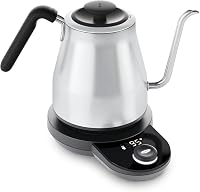
The OXO Brew Pour Over Gooseneck Kettle suits brewers who want more control over temperature selection. It adjusts in 1-degree steps from 104°F to 212°F, holds the setting for up to 30 minutes, and includes a count-up timer.
Its 1-liter capacity offers more room than the Cosori, while the timer helps you track pauses and pours without starting a separate phone timer. You still need a scale if your recipe measures water by weight.
Skip the OXO if you mostly press a button for boiling water or already get everything you need from presets. Its extra controls are useful for deliberate recipe changes, not a requirement for making a good cup.
Read what variable temperature means on a kettle for more on adjustable settings. Our guide to whether a gooseneck kettle is worth it helps you weigh those features against your brewing habits.
How should you choose capacity and counter space?
Choose a kettle that holds all the water needed for your usual session, including filter rinsing and brewing. A kettle that barely covers the drink itself may need a refill before you finish.
Measure the water you use for a normal brew rather than counting mugs. Mug sizes vary, and a shared morning routine can require much more water than a single dripper.
If you're unsure how much room you need, see how big an electric kettle to choose. Always follow the kettle's minimum and maximum fill marks.
Check the full space needed for the kettle, its base, and its projecting spout. Leave room to lift it clear and open the lid without reaching under a low cabinet.
Handle comfort also matters because pour-over involves holding the kettle above the brewer through several pours. Consider the weight of the water along with the kettle, especially if wrist strain affects your appliance choices.
If you already have a larger kettle, decide whether replacing it would make shared drinks less convenient. A smaller gooseneck can serve a different task, but it also needs storage space.
How do you set up and use a gooseneck kettle?
Start with a stable brewer, a clear counter, and a repeatable recipe. Put the kettle base on a dry, level surface, keep the cord away from the work area, and follow its first-use instructions.
For pour-over, this sequence keeps the kettle's control useful:
- Measure enough water for rinsing and brewing without exceeding the maximum fill line.
- Set up the filter and brewer securely over your cup or server.
- Heat the water to the temperature your recipe calls for.
- Rinse the filter if your method calls for it, then empty the rinse water before adding coffee.
- Add the measured grounds, level the bed, and place the brewer on a scale.
- Start the timer and pour according to the recipe, watching both water weight and flow.
Keep the spout close enough to aim comfortably without touching the grounds or filter. Begin with a gentle tilt, then adjust your wrist rather than making sudden movements with your whole arm.
Avoid chasing perfect circles while losing track of water weight. A steady stream and repeatable amounts are more useful than an elaborate pouring pattern.
For the Cosori, use at least 118 mL of water and keep the exterior and base dry. Don't assume every kettle shares that minimum.
What mistakes and care habits matter most?
The main mistake is expecting the spout to fix the whole brew. A gooseneck gives you control, but changing grind size, temperature, and pouring pattern together makes it hard to learn what helped.
Keep one recipe stable before adjusting it. If coffee drains too slowly or tastes wrong, review the grind and recipe as well as your pour.
Don't assume the slowest possible stream is always best. Some recipes call for a stronger pour, and trickling too cautiously can stretch the brew beyond your intended timing.
Hand wash all 3 kettles and follow each model's care instructions. Keep electrical parts dry, let the kettle cool before cleaning, and avoid abrasive tools that could damage its surfaces.
Mineral scale needs descaling rather than harder scrubbing. Follow the model's directions for the cleaner and rinse cycle, and use our electric kettle descaling guide to understand the basic process.
Don't leave residue from a cleaning solution inside the spout. Rinse thoroughly before making another drink.
Which kettle should you choose for your routine?
You need a gooseneck kettle when pour control is worth changing your daily routine for. Choose the Cosori for straightforward presets and smaller brews, or the OXO when adjustable temperatures and a built-in timer support the recipes you use.
Choose the Cuisinart when your main job is heating a larger batch for mugs, a teapot, or a French press. Keep your current kettle if occasional pour-over is already easy to manage.
Before buying, write down your usual water amount and the one feature you're missing. If that points to a narrow spout, compare our best gooseneck electric kettles; if it points to adjustable heat, see electric kettles with temperature control.
If you're still deciding whether you need a gooseneck kettle, use the practical differences in our gooseneck and regular electric kettle comparison to make the final choice.
Frequently asked questions
Do you need a gooseneck kettle for pour-over coffee?
No, a regular kettle can make pour-over coffee, but a gooseneck makes small, directed pours easier to manage. Buy one if you brew this way often and struggle to control the stream, then use a scale and a consistent recipe to make that added control useful.
Is a gooseneck kettle useful for tea?
A gooseneck kettle works for tea, but adjustable temperature usually matters more than spout shape. Choose settings that suit the teas you drink and enough capacity for your usual pot or mugs, then favor a gooseneck only if you also make pour-over coffee or prefer a narrow stream.
Can you use a regular kettle for pour-over coffee?
Yes, you can use a regular kettle for pour-over coffee by pouring gently and keeping the stream close to the coffee bed. Start with small pours and avoid flooding the filter, then consider a gooseneck if controlling the flow remains the main obstacle in your daily brewing routine.
What should you compare before buying a gooseneck kettle?
Compare usable capacity, temperature controls, handle comfort, counter space, and care needs against your normal brew routine. Include water for rinsing the filter as well as brewing, and choose a timer or keep-warm function only if it saves a step you actually take during preparation.