Electric Kettle Buying Guide
Choose an electric kettle by batch size and brewing style. Pick a regular spout for everyday filling, a gooseneck for controlled pours, and temperature controls that match your tea or coffee.
On this page (10 sections)
- What capacity should an electric kettle have?
- Do you need temperature control?
- Is a gooseneck spout right for your routine?
- Which kettle materials should you compare?
- Will the kettle fit your counter and daily routine?
- What safety features are worth checking?
- How should you set up and use a new kettle?
- How should you clean and descale an electric kettle?
- Which common buying mistakes should you avoid?
- Which electric kettle fits your priorities?
Choose an electric kettle that holds your normal batch and pours the way you brew. A regular spout suits everyday hot water, while a gooseneck helps with pour-over coffee; temperature controls matter most when your drinks need different heat settings.
Start with the water you actually use, including any needed to rinse a coffee filter or warm a brewing vessel. Then check the controls, water-contact materials and space around the base.
The right choice should make your usual drink easier without adding features you'll ignore. For a broader model shortlist, see our best electric kettles.
What capacity should an electric kettle have?
Choose capacity for your largest normal session, rather than the biggest batch you might make once a year. Leave room for any rinse water your brewing method needs, while staying below the maximum fill mark.
A kettle's stated capacity is its upper limit, not the amount you must heat each time. The minimum fill requirement matters just as much if you usually make one small drink.
Measure your electric kettle batch with your own mugs
Fill your usual mugs with cold water, then measure that water in a marked jug. This gives you a useful batch size without relying on a brand's definition of a cup.
For example, two 350 mL mugs need 700 mL before you allow for a filter rinse. A smaller kettle might cover the drinks but leave little spare water for preparation.
Coffee recipes often state the water amount directly, which makes sizing easier. Tea drinkers should measure their teapot or usual mug rather than assume every serving uses the same amount.
If several people make drinks at different times, you may not need a large batch. A smaller fill heated when needed can suit that routine better than keeping a full vessel hot.
When a smaller kettle makes sense
A smaller kettle suits a focused routine, such as one pour-over brew or a couple of modest drinks. The Cosori Gooseneck Kettle 0.8L holds 800 mL and pairs its narrow spout with a counter-balanced handle.
Choose the Cosori if you want repeatable preset choices and a controlled stream for a small coffee station. Its HOLD TEMP function runs for up to 1 hour, which can help when you prepare another brew shortly after the first.
Skip it if you regularly fill a large teapot, make several generous mugs together or mainly need water for cooking. The smaller batch and narrow stream work against those jobs.
Small capacity also doesn't guarantee a small footprint. A long spout and separate base can occupy more counter space than you expect, so measure the whole setup.
When a larger kettle earns its space
A larger kettle is useful when several servings need to be ready together. The Cuisinart CPK-17P1 Electric Kettle has a 1.7 L capacity, giving it more room for a shared tea round or water for oatmeal and soup.
Choose the Cuisinart for a shared kitchen where people want different drinks from the same appliance. Its regular spout also suits filling a French press or other broad opening.
Skip it if your main goal is directing a thin stream around a small pour-over dripper. A gooseneck is a better match for that specific job.
Think about lifting as well as volume: each liter of water adds about 1 kilogram to the load. You don't need to fill a large kettle completely, and carrying a sensible amount makes pouring easier.
Our guide to how big an electric kettle you need can help you match capacity to a household or brewing routine.
Do you need temperature control?
Choose temperature control for drinks with different brewing needs. If your routine is mainly boiling water for black tea, instant drinks or kitchen tasks, a simple boil function may be enough.
Start with the directions on your tea package or your coffee recipe. Those give you a useful setting to look for, instead of buying the kettle with the longest control menu.
Presets suit repeat drinks
Presets save you from dialing in the same temperature each morning. They work well when you brew a few familiar drinks and their recommended temperatures line up with the available buttons.
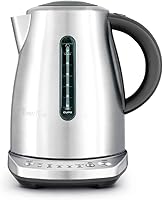
The Breville BKE720 Temp Select has 5 settings for tea and coffee, plus a 20-minute keep-warm function. Its 57 oz jug suits a routine that needs more water than a small pour-over batch.
Choose the Breville if you switch between tea varieties and French press coffee and prefer direct, one-touch choices. Its soft-opening lid is designed to release steam gently and reduce splashing when opened.
Skip it if you want to adjust temperature by single degrees or need a narrow spout for careful coffee pouring. Those priorities point toward a different control style or kettle shape.
The Cuisinart's choices are 160°F, 175°F, 185°F, 190°F, 200°F and Boil. That set gives a shared household several clear starting points without requiring everyone to learn a detailed menu.
A tea label may recommend a temperature between two presets. If that happens often with your preferred drinks, finer control becomes more useful than an extra preset you won't select.
Degree-by-degree control suits recipe changes
Fine adjustment helps when you change coffee recipes or want a setting that falls between common presets. It is most useful when you already pay attention to water temperature and can use the extra control.
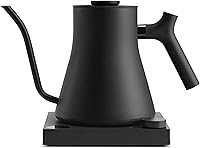
The Fellow Stagg EKG Pro offers to-the-degree adjustment and an LCD screen. That makes it a stronger fit for deliberate recipe changes than for someone who only presses Boil.
The target temperature is a starting point for brewing, not a promise about the finished drink. Water loses heat during pouring, and a cold mug or brewing vessel absorbs some of it.
Keep your method consistent before changing the setting repeatedly. Using the same water amount, vessel and brewing time makes it easier to judge which change helped.
Our electric kettles with temperature control guide compares this feature across models. For tea routines, see how to choose an electric kettle for tea.
Keep warm solves a timing problem
Keep warm is useful when you want another serving soon or need several pours during preparation. It offers less value if you heat one mug, pour it immediately and leave the kitchen.
Check whether the function needs a separate button press and what happens when you lift the kettle. A memory feature and a temperature-hold feature handle different parts of that routine.
The Cuisinart holds temperature for up to 30 minutes and allows up to 2 minutes off the base without losing its place in the brewing process. That suits a quick pour followed by a return to the base.
Don't use a hold setting as a reason to heat a full kettle every morning. Heat what you expect to use, and switch off the hold function when the session is over.
Is a gooseneck spout right for your routine?
Choose a gooseneck when placing and pacing the stream matters, especially for pour-over coffee. A regular spout is the more direct choice for filling mugs, teapots and wide containers.
The key difference is how you deliver the water. A narrow spout helps you add it slowly to a small area, while a regular spout suits a broader range of filling jobs.
Pour-over coffee benefits from controlled delivery
In pour-over brewing, you may need to wet the grounds evenly, pause, then add more water in stages. A gooseneck gives you a useful way to control those movements.
The Fellow Stagg EKG Pro combines a precision spout with a 0.9 L vessel and a brew timer. Its temperature-hold function supports a brewing routine with pauses between preparation and pouring.
Choose the Fellow if pour-over coffee is the main job and you want fine temperature adjustment alongside a brewing timer. Its features suit someone who follows recipes and changes one brewing variable at a time.
Skip it if you mainly fill large vessels or want simple buttons for familiar tea types. The extra adjustment and narrow stream won't offer much help with those needs.
Between the two goosenecks here, choose Cosori for preset-led brewing and Fellow for finer temperature changes. Decide which control style you will actually use before focusing on appearance.
Regular spouts suit general kitchen use
A regular spout is suitable for French press coffee because you don't need to trace a slow pattern over a bed of grounds. It also makes sense for tea bags, loose-leaf infusers and instant foods.
You can make tea with a gooseneck, but the shape is not a requirement for good tea. Temperature, water amount and steeping time are usually more relevant to that choice.
A gooseneck also needs clear space in front of the kettle. Don't place its projecting spout where someone can catch it while reaching for another appliance.
Read do you need a gooseneck kettle? for help choosing the shape. Our best gooseneck electric kettles guide focuses on models built for controlled pouring.
Which kettle materials should you compare?
Compare the parts that touch water, rather than judging by the outside finish. Check the interior, underside of the lid, spout, filter and seals if avoiding a particular material is a buying priority.
A stainless steel body doesn't prove every internal part is metal. A glass vessel can also have a plastic lid, filter housing or other components.
Separate the body from the water path
The Cosori has a food-grade 304 stainless steel interior, lid and spout. That makes it a useful option when metal water-contact surfaces are high on your checklist.
The Fellow uses stainless steel, plastic and heat-resistant silicone among its materials. That overall material mix does not identify the location of every part, so don't assume it describes an all-metal water path.
The same care applies to broad material claims on any kettle. A metal exterior, a BPA-free claim and a claim about plastic contact answer different questions.
Our explanation of what “no plastic” means on an electric kettle helps you separate those terms before choosing.
Visibility and access affect daily care
Glass lets you see the water and deposits on the vessel walls. A metal kettle may use a separate water window or internal marks to show its fill level.
Visibility is helpful, but cleaning access matters too. Think about whether you can reach the interior safely with a suitable cloth or brush and remove a filter when its care directions allow it.
Stainless steel still needs descaling, and visible marks aren't always permanent damage. Mineral residue can collect on either material, especially where hard water repeatedly dries.
Avoid picking a body material on the assumption that it removes the need for care. Our glass vs stainless steel electric kettle comparison covers the practical differences.
Will the kettle fit your counter and daily routine?
Choose a spot with room to fill, lift and pour safely, not just enough space for the base. Check lid clearance, cord reach and the path between the kettle, sink and brewing area.
A kettle can fit beneath a cabinet while being awkward to open there. Steam also needs space, so follow the maker's clearance directions and avoid trapping it under shelves.
Check the full footprint
Measure the usable counter area, including room around the handle and spout. For example, the Cosori measures 11.6 inches long by 9 inches wide, which is worth checking against a narrow coffee station.
Don't judge size from capacity alone. Shape, control placement and the base can matter more than the water volume when you're working with a shallow counter.
Allow space to set down your mug or brewing vessel without reaching across the hot kettle. A clear serving area helps prevent awkward pours and collisions.
Cord reach can decide where the base goes. The Fellow has a 2-foot cable, so check that a suitable outlet is within reach of your planned position.
Match power requirements to the outlet
Check voltage compatibility before plugging in a kettle, especially if you are moving it between countries. The Breville is rated for 110–120 V.
Wattage affects heating, but it isn't a complete measure of waiting time. Starting water temperature and the amount you heat also change how long the process takes.
The Breville and Cuisinart are both rated at 1500 W. Don't assume that matching wattage means identical performance, noise or handling.
Avoid crowding a circuit with other high-power appliances, and follow the kettle's instructions for its electrical connection. Our guide to how many watts an electric kettle needs explains the relationship between power and everyday use.
What safety features are worth checking?
Look for automatic shutoff and boil-dry protection, then pair them with sensible placement and careful pouring. These functions address specific risks; they don't prevent every spill or steam burn.
The Cuisinart includes both protections and a stay-cool nonslip handle. Even with a handle designed for serving, keep your fingers away from the hot body, lid and spout.
Lid and handle design matter during serving
A lid should close securely before heating or pouring. If it is loose or not seated correctly, stop and fix that before starting the kettle.
Let active boiling stop before lifting, and pour into a stable vessel on the counter. Don't hold a mug in one hand while aiming a full kettle with the other.
Keep your face away from the lid when opening it. A soft-opening lid can help manage steam release, but the steam is still hot.
If a full vessel feels hard to control, heat a smaller amount that stays above the minimum mark. Use the handle as directed rather than gripping the hot body for support.
Placement prevents avoidable spills
Keep the base on a level, dry surface away from the counter edge. Route the cord so it cannot be pulled by a child or caught by someone walking past.
Never fill past the maximum mark or operate below the minimum amount. Overfilling can cause hot water to escape, while too little water can trigger protection or interfere with normal use.
If the kettle shuts down after running short of water, unplug it and follow its cooling instructions. Don't repeatedly restart it to force another heating cycle.
Read are electric kettles safe? for more advice on placement and handling.
How should you set up and use a new kettle?
Start with the model's first-use directions, then rinse and prepare it before making a drink. Some models call for an initial water-only cycle that you discard.
Remove packaging and check that the kettle, cord and base are undamaged. Use the base intended for that kettle rather than swapping one that looks similar.
Make the first fill away from the base
Lift the kettle off its base before adding water. Keep the outside and electrical contact area dry, then close the lid before returning it.
Use fresh drinking water within the marked limits. Filtered water can be useful, but not every household filter reduces the minerals that form scale.
Select the setting your drink needs and check whether hold mode is active. A few seconds spent learning the controls prevents unwanted reheating or an unexpected keep-warm cycle.
On the Cosori, the ready tone can be turned off by holding HOLD TEMP for 8 seconds. That is useful if you prefer a quieter morning routine.
Keep food and milk out of a water kettle
Use the kettle for water unless its manual expressly permits something else. Heat water in it, then add that water to oatmeal, soup, cocoa or tea in a separate vessel.
Milk and food can leave residue that is difficult to remove and may interfere with normal operation. Steeping tea directly inside also adds cleanup unless the kettle is designed for it.
Start with the drink's recommended temperature and brewing time. If the result needs adjustment, change one thing at a time so you can tell what helped.
For pour-over coffee, practice the stream with cool water before your first hot brew. Learn how the flow changes as you tilt, without trying to correct an unfamiliar pour over a full dripper.
How should you clean and descale an electric kettle?
Remove everyday residue and mineral scale in separate steps, following the kettle's care directions. Wiping the outside won't remove internal deposits, and descaling doesn't replace cleaning a dirty lid or handle.
Unplug the kettle and let it cool before routine cleaning. Keep the base, cord and electrical contacts out of water.
Clean the parts you touch and pour through
Wipe the exterior with a suitable damp cloth, then dry it. Avoid abrasive pads that can scratch the finish or damage markings.
Clean around the lid and spout as directed, where splashes can dry unnoticed. If a removable filter is washable, take it out only as instructed and refit it securely.
The Cuisinart has a removable, washable scale filter. That filter can catch loose particles, but it doesn't remove dissolved minerals or eliminate the need to descale.
Breville, Cosori and Fellow specify hand washing for these kettles. Don't treat that as permission to immerse the entire appliance or put its base in the sink.
Descale when deposits appear
Check the interior regularly and descale when you see buildup or when the manual recommends it. Hard water may call for more frequent attention than softer water.
Use the approved descaling method and concentration for your model. Don't combine cleaners or leave a solution soaking longer than directed.
Rinse thoroughly afterward and complete any fresh-water cycles the instructions require. Don't serve a drink until the descaling solution has been fully removed.
A brown or white mark doesn't automatically mean the vessel is ruined. Clean it with the approved method first, and seek support if damage, leaks or persistent residue remain.
Our guides explain how to clean an electric kettle and how to descale an electric kettle in more detail.
Which common buying mistakes should you avoid?
Avoid choosing by the longest feature list or the largest capacity. A useful kettle solves your regular job with controls, handling and care you can live with.
Before ordering, write down your normal batch, brewing method and any material requirement. Those three details rule out many poor matches quickly.
- Buying for rare guests: Size for normal use unless large gatherings are frequent enough to justify the extra bulk.
- Confusing presets with fine adjustment: Several buttons don't offer the same freedom as degree-by-degree control.
- Choosing a gooseneck for appearance: Make sure the slow, directed stream helps your brewing method.
- Ignoring the minimum fill: A large kettle may require more water than your smallest drink needs.
- Assuming every metal kettle avoids plastic contact: Check the water path rather than the outer finish.
- Overlooking lid clearance: Leave room to open, fill and release steam safely.
- Expecting a filter to stop scale: A particle filter and mineral reduction are different things.
Don't choose a hold function solely because it runs longest. Its value depends on whether you return for another drink during that window.
Also avoid treating exact temperature as a cure for every brewing issue. Coffee grind, tea quantity, water quality and brewing time still affect the cup.
Which electric kettle fits your priorities?
Choose your electric kettle by its main daily job, then use secondary features to break a close tie. Don't compromise on batch size or pouring style to gain a control you rarely need.
Pick the Breville BKE720 Temp Select for a shared tea-and-coffee routine built around preset choices. Skip it if fine temperature adjustment or a narrow pour is your main requirement.
Pick the Cosori Gooseneck Kettle 0.8L for smaller pour-over batches with simple preset controls. Skip it if several large servings need to be ready together.
Pick the Cuisinart CPK-17P1 Electric Kettle for larger batches and varied everyday drinks. Skip it if your priority is carefully placing a thin stream over coffee grounds.
Pick the Fellow Stagg EKG Pro for recipe-focused pour-over brewing with fine temperature changes. Skip it if you mainly want boiling water for mugs and kitchen tasks.
If two models still fit, check the minimum fill, counter space and cleaning steps before choosing. For the next comparison, use our best electric kettles guide, narrow by temperature control, or focus on pour-over use.
Frequently asked questions
How many cups should an electric kettle hold?
Choose enough capacity for your largest normal batch, measured with your own mugs; a 0.8 L kettle holds about 800 mL, so two 350 mL drinks leave little extra for rinsing a coffee filter. Allow for brewing water, follow the minimum fill mark, and avoid buying extra capacity you'll rarely use.
Is variable temperature worth it in an electric kettle?
Variable temperature is worth choosing if your tea or coffee calls for water below boiling or you often switch drinks; presets simplify a regular routine, while degree-by-degree control suits small recipe changes. If you mainly need boiling water, extra temperature controls add little practical value to that task.
Do you need a gooseneck electric kettle?
Choose a gooseneck electric kettle for pour-over coffee when you need to place a slow stream over a small area; a regular spout suits mugs, French press coffee and kitchen filling jobs. The narrow spout helps control delivery, but it won't replace a suitable grind, recipe or brewing technique.
Which is better, a glass or stainless steel electric kettle?
Glass is useful if you want to see the water and mineral buildup, while stainless steel suits buyers who prefer a metal vessel. Neither outer material tells you everything about water contact; check the interior, lid, spout, seals and filter separately if avoiding particular materials matters to you.
What safety features should an electric kettle have?
Look for automatic shutoff and boil-dry protection, plus a handle and lid you can use comfortably. Keep the base dry, place the kettle away from counter edges, and follow its fill marks; let active boiling stop before pouring, and keep your face and hands away from escaping steam.