What Does Variable Temperature Mean on a Kettle?
A variable temperature kettle lets you select a water temperature below or at boiling. Choose presets for quick drink settings, or adjustable controls to follow specific brewing instructions.
On this page (10 sections)
- What does variable temperature mean on a kettle?
- When is temperature control worth having?
- Which preset kettle suits a simple tea routine?
- When should you choose adjustable controls?
- Does keep warm matter as much as temperature choice?
- How precise are temperature settings?
- What should you check beyond the controls?
- How do you set up and care for one?
- Which common mistakes should you avoid?
- Which variable temperature kettle should you choose?
A variable temperature kettle lets you select how hot the water gets, rather than boiling every batch. Choose preset buttons for a simple tea routine, or adjustable controls if your brewing instructions call for temperatures between those presets.
The best choice depends on your drinks, how many people share the kettle, and whether you need water held warm. Extra settings help only when you'll use them.
What does variable temperature mean on a kettle?
Variable temperature means the kettle can stop heating at a selected target below or at boiling. A basic kettle usually brings water to a boil and switches off.
Some models use buttons labeled by drink, such as green tea or coffee. Others let you choose a temperature within a range, and some combine both approaches.
It isn't a cooling feature. If the water is already hotter than your new target, selecting a lower setting won't immediately bring it down.
When is temperature control worth having?
Temperature control is useful when your usual drinks need water below boiling. It removes the guesswork of boiling water, waiting, and hoping it has cooled enough.
Water temperature affects how tea and coffee extract flavor. Start with the instructions for your tea or brewing method, then change one thing at a time if the drink tastes too harsh or too weak.
Keep the amount of tea or coffee and brewing time steady while adjusting temperature. Changing all 3 at once makes it hard to tell which change helped.
If you mainly make drinks or meals that call for boiling water, a basic kettle may cover your needs. For broader feature choices, see our electric kettle buying guide or compare electric kettles with temperature control.
Which preset kettle suits a simple tea routine?
Breville suits a few familiar drinks; Cuisinart suits a wider preset routine. Choose between them by matching the available buttons to what you actually brew.
Breville: a variable temperature kettle for familiar drinks
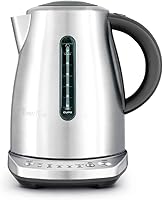
The Breville BKE720 Temp Select suits people who rotate among black, green, white, and oolong tea or French press coffee. Its 5 one-touch settings keep the choice simple.
The soft-opening lid gently releases steam, while the cordless jug sits on a rotating base with cord storage. These features suit a shared kitchen where people fill and pour from different positions.
Skip Breville if you want to choose temperatures between fixed presets. Its appeal here is a short set of ready-made choices, rather than a broad adjustable range.
Cuisinart: more fixed choices and useful memory
The Cuisinart CPK-17P1 suits tea drinkers who want clear temperature buttons. Its choices are 160°F, 175°F, 185°F, 190°F, 200°F, and Boil.
Its memory feature lets you lift the kettle off the base for up to 2 minutes without losing its place in the heating process. That helps when you pour a cup and return the kettle promptly.
Skip Cuisinart if your recipes regularly need temperatures between its buttons or below its lowest preset. More presets still don't give you freely adjustable control.
For help matching settings to tea, read how to choose an electric kettle for tea. Our best electric tea kettles guide covers more choices.
When should you choose adjustable controls?
Choose adjustable controls when your target temperatures don't fit a fixed menu. They also suit people who like changing brewing temperature while keeping the rest of their recipe steady.
The Cosori Stainless Temperature Kettle 1.7L combines 5 presets with an adjustable range from 105°F to 212°F. It suits a household that wants quick buttons for daily use and more choice for specific recipes.
You can switch between Fahrenheit and Celsius and mute the alert sounds. Those controls help if your recipes use different units or you make drinks while others are asleep.
Skip Cosori if you only use Boil and won't use its extra controls. For pour-over coffee, also consider pouring control: temperature adjustment doesn't replace the slower flow of a gooseneck.
Our guide to whether you need a gooseneck kettle helps you decide which feature matters more for your brewing method.
Does keep warm matter as much as temperature choice?
Keep warm matters if you make several cups over time, rather than pouring all the water at once. Temperature selection sets the target; keep warm extends the time water stays ready.
Breville holds for 20 minutes, Cuisinart offers 30 minutes, and Cosori offers 60 minutes. Pick a hold time that matches the gap between drinks, rather than choosing the longest automatically.
The Smeg Variable Temperature Kettle 1.7L suits buyers who want a cream, retro-style appliance that stays on display. Its soft-opening lid and removable limescale filter also help with filling and routine care.
Skip Smeg if you need a longer hold or lower temperature target than it offers. Choose it when its appearance and controls both fit your routine.
Read whether an electric kettle keep-warm setting is worth it if you're unsure how often you'd use the feature.
How precise are temperature settings?
A temperature setting is a target, not proof of measured accuracy. The number of presets and the size of an adjustment step don't tell you how closely water reaches or holds that target.
Cosori describes its temperature adjustment as ±5°F. Don't read that wording as a measured accuracy tolerance.
Water also loses heat as you pour it into a mug or brewing vessel. For a more repeatable routine, use the same vessel and similar water amounts, and pour soon after heating finishes.
What should you check beyond the controls?
Check capacity, filling access, and water-contact materials before choosing. A useful control panel won't make up for a kettle that feels awkward in your kitchen.
Cosori, Cuisinart, and Smeg each hold 1.7 liters; Breville holds 57 oz. These are multi-serving sizes, so check the minimum fill mark if you usually make just one small cup.
Maximum capacity isn't a target for every use. Heat the amount you need within the marked limits, and leave enough space above the kettle to open its lid without crowding a cabinet.
Cosori has an all-metal interior with no plastic contacting the water, plus 2 lid-opening angles and an internal fill indicator. It's the clearest fit here if avoiding plastic water contact is a firm requirement.
A stainless steel body alone doesn't describe every water-contact part. Read what “no plastic” means on an electric kettle and glass vs stainless steel electric kettles if materials drive your choice.
How do you set up and care for one?
Follow the model's first-use instructions, then build a consistent filling and brewing routine. Place the base on a dry, level surface with space for steam to escape.
Before each use, check the fill marks and close the lid as directed. Keep the base and electrical contacts dry, and don't immerse them during cleaning.
Use the kettle for water unless its instructions explicitly allow other liquids. Brew tea in a cup or pot, since loose leaves and milk can leave residue inside the kettle.
Let it cool before cleaning, and descale according to its care instructions when mineral deposits appear. A removable scale filter catches particles but doesn't replace cleaning the kettle's interior.
Our electric kettle descaling guide explains the next steps. Avoid abrasive tools that could damage the interior finish.
Which common mistakes should you avoid?
Match the setting to the drink, and keep the fill level within the marks. Most avoidable problems come from treating every preset as universal or every batch as a full kettle.
- Choosing by the drink label alone: Check the actual temperature against your tea instructions.
- Selecting a lower setting after boiling: Allow time for the water to cool.
- Overfilling for guests: Heat another batch instead of exceeding the maximum mark.
- Holding water by habit: Turn off keep warm when everyone has finished.
- Changing several brewing steps together: Adjust temperature, dose, or steeping time separately so the result teaches you something.
Which variable temperature kettle should you choose?
Choose Breville for familiar one-touch drinks, Cuisinart for a wider fixed menu, Cosori for adjustable controls and an all-metal interior, or Smeg for a retro kitchen where its range and hold time fit.
Before buying a variable temperature kettle, write down your 2 most-used brewing temperatures and the usual gap between cups. Those needs should settle the control and keep-warm choices.
If every drink you make needs boiling water, keep the decision simple with a basic kettle. For more tea-focused options, browse best electric tea kettles.
Frequently asked questions
What does variable temperature mean on a kettle?
Variable temperature means you can select a water temperature instead of heating every batch to boiling; some kettles offer fixed presets, while others let you adjust the target within a range. Check the actual temperature choices, since the feature name doesn't mean every model offers the same control.
Is a variable temperature kettle worth it?
A variable temperature kettle is worth considering if you regularly brew tea or coffee with water below boiling; it saves the step of boiling water and judging when it has cooled enough. If your drinks and meals mainly need boiling water, a basic kettle can cover that routine.
What temperature should I use for tea?
Start with the temperature on your tea package, then adjust to taste while keeping the amount of tea and steeping time steady; green and delicate teas often use cooler water than black teas. A named preset is a starting point, since different teas within one type can need different temperatures.
Does a variable temperature kettle keep water warm?
Some variable temperature kettles include keep warm, but temperature selection and heat holding are separate features; compare the hold duration and read the operating instructions before relying on it. A short hold suits back-to-back cups, while a longer hold helps when people make drinks at different times.