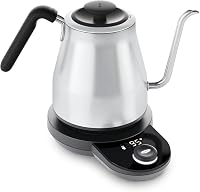
Is a Gooseneck Kettle Worth It?
A gooseneck kettle is worth it for regular pour-over brewing, where a narrow stream helps you control where water lands. For filling mugs or cooking pots, a regular kettle is usually the more practical choice.
On this page (10 sections)
- When is a gooseneck kettle worth it?
- When is a regular kettle the better choice?
- Does temperature control make it more worthwhile?
- Which of these gooseneck kettles suits your routine?
- What should you check before choosing a gooseneck kettle?
- How do you set up and use a gooseneck kettle?
- What mistakes can cancel out the benefit?
- How much care does a gooseneck kettle need?
- Is a gooseneck kettle worth it for tea?
- How do you decide if a gooseneck kettle is worth it?
A gooseneck kettle is worth it for regular pour-over coffee, where control over the water stream matters. If you mainly fill mugs, steep tea bags, or boil water for cooking, a regular kettle usually makes more sense.
The value comes from easier pouring, not an automatic improvement in flavor. Temperature settings, timers, and keep-warm functions can also help, but each solves a different problem.
When is a gooseneck kettle worth it?
A gooseneck kettle earns its place when you want to repeat a brewing recipe and control how water reaches the coffee grounds. Its narrow spout helps you aim a steady stream within a small dripper.
With a broad spout, a small change in tilt can send more water out than you intended. A gooseneck gives you a more manageable stream for small circles, pauses, and measured additions.
That matters when you want to wet the grounds evenly without sending a rush of water into one spot. It also makes it easier to stop at your target water weight.
Is a gooseneck kettle worth it for occasional brewing?
For occasional pour-over, start with the kettle you already have. Practice a gentle pour, and notice whether controlling the stream is actually the part that holds you back.
If you regularly overshoot your water target or struggle to keep water inside the coffee bed, a gooseneck addresses that problem. If your coffee changes because you measure beans by eye, a scale may be the more useful first addition.
Our guide to whether you need a gooseneck kettle explains where spout control makes the biggest difference.
When is a regular kettle the better choice?
A regular kettle is better when you need plenty of hot water with little attention to pouring. Filling a teapot, making instant drinks, and adding water to a cooking pot rarely call for a thin stream.
A gooseneck can do those jobs, but its pouring style may feel slow. A smaller vessel can also mean a second heating cycle when you're serving several people.
Keep your existing kettle if it already handles your routine well and pour-over is a rare extra. For the broader choice of size, controls, and materials, start with the electric kettle buying guide.
See gooseneck versus regular electric kettles if you're deciding which shape should serve as your only kettle.
Does temperature control make it more worthwhile?
Temperature control adds value when your drinks call for different water temperatures. It lets you choose a setting directly rather than boil water and guess how long to let it cool.
Preset buttons suit people who want a few simple choices. Adjustable settings suit brewers who follow recipes or want to change temperature in smaller steps.
A gooseneck spout and temperature control are separate features, so decide whether you need one or both. Our guide to electric kettles with temperature control explains that choice.
Keep-warm helps if you prepare several drinks in stages or get interrupted before brewing. A timer is useful for tracking pours, though a phone or separate timer can handle the same job.
Which of these gooseneck kettles suits your routine?
Choose Cosori for preset simplicity, OXO for adjustable temperature and more capacity, or Fellow for a screen-based brewing setup. Match the controls to your habits before choosing by appearance.
Cosori: simple presets for a smaller brew
The Cosori Gooseneck Kettle 0.8L suits someone who wants 5 one-touch temperature presets rather than fine adjustments. Its 0.8-liter capacity fits a smaller brewing routine, while the hold function keeps water warm for up to 1 hour.
The interior, lid, and spout use food-grade 304 stainless steel. Its counterbalanced handle is designed to help you maintain a steady pour.
Choose it if you make similar drinks each day and want straightforward controls. Skip it if you want single-degree temperature choices or regularly need more water than its capacity allows.
For a quieter routine, you can disable the ready tone by holding HOLD TEMP for 8 seconds. That is useful if you brew while others are sleeping.
OXO: finer adjustments and a larger batch
The OXO Brew Pour Over Gooseneck Kettle suits brewers who want single-degree adjustment from 104°F to 212°F. Its 1-liter capacity is the largest of these 3 options.
A built-in count-up timer helps you follow brewing stages, and the kettle holds your selected temperature for up to 30 minutes. Automatic shut-off ends the keep-warm cycle.
Choose OXO if you switch between coffee and tea recipes or want extra water for rinsing a filter before brewing. Its balanced design and cool-touch handle also support controlled handling.
Skip it if you prefer preset buttons and won't use fine adjustments. The extra controls add little value if every drink starts with fully boiled water.
Fellow: a screen-based pour-over setup
The Fellow Stagg EKG Pro suits a regular pour-over brewer who wants to-the-degree temperature control and a color LCD. It combines a brew timer, temperature hold, and a 0.9-liter vessel.
Fellow designs the precision spout for a smooth, steady stream. Choose it if you want to follow a measured recipe with the temperature and timing controls in one place.
Skip it if you mainly need hot water for mugs or prefer a simple set of preset buttons. Its brewing controls won't replace a scale, fresh coffee, or a suitable grind.
Compare its screen and control approach with OXO's features based on what you'll use each morning. A more involved interface is worthwhile only if it makes your routine easier.
What should you check before choosing a gooseneck kettle?
Check total water needs and counter space before comparing extra features. Your finished drink is only part of the water you may need for a brewing session.
Allow for filter rinsing and warming the dripper or server, as well as the brew itself. For several drinks, decide whether you want one full batch or are happy to refill between cups.
Measure the space for the whole kettle and base, including the projecting spout. Leave room to lift it, remove the lid, and keep steam away from the underside of a cabinet.
Think about pouring comfort too. A full vessel requires more effort to hold steady, so buying the largest size isn't always helpful for someone who makes one small brew.
How do you set up and use a gooseneck kettle?
Start with a stable, dry setup and one repeatable recipe. Follow the kettle's manual for first-use cleaning, fill limits, and placement.
Keep the base on a level counter and fill the kettle away from electrical parts. Dry the outside before returning it to the base, and stay within its minimum and maximum fill marks.
For pour-over, place your dripper and cup or server on a scale. Rinse the filter if your brewing method calls for it, empty that rinse water, then add and level the grounds.
Begin with the spout near the coffee bed without touching it. Tilt gently, keep the stream steady, and follow the recipe's pour amounts and pauses.
A comfortable grip and a relaxed elbow help more than large, sweeping circles. Practice with cool water over a sink if judging the tilt feels awkward.
What mistakes can cancel out the benefit?
The biggest mistake is changing several brewing variables at once. If you alter grind, temperature, dose, and pouring style together, you won't know which change helped.
Keep the recipe steady and adjust one thing at a time. A gooseneck makes your pour easier to repeat, but it can't correct an unsuitable grind or an uneven coffee dose.
Avoid pouring from so high that the stream splashes or digs sharply into the grounds. Don't tilt farther just to empty the kettle faster during a careful brewing stage.
Keep fingers away from the spout and steam path, and use the handle. Controlled pouring still involves very hot water.
How much care does a gooseneck kettle need?
A gooseneck kettle needs regular rinsing and descaling as minerals build up. All 3 models here require hand washing.
Unplug the base and let the kettle cool before cleaning. Keep electrical parts out of water, and avoid abrasive tools that could damage surfaces.
Follow the model's care instructions for descaling solution, soaking time, and rinsing. Don't push sharp objects into the narrow spout to remove deposits.
Hard water can make mineral buildup appear sooner, so inspect the inside rather than relying on a fixed calendar. Our guide to descaling an electric kettle explains the process.
Is a gooseneck kettle worth it for tea?
For tea alone, temperature control usually matters more than spout shape. A narrow stream offers little advantage when you're simply filling an infuser or teapot.
Choose a gooseneck if you also make pour-over coffee and want one kettle for both jobs. Choose a regular temperature-controlled kettle if larger tea batches are your main need.
Follow the tea's brewing directions rather than assuming every leaf needs boiling water. Read how to choose an electric kettle for tea or the broader electric tea kettle guide to compare tea-focused features.
How do you decide if a gooseneck kettle is worth it?
A gooseneck kettle is worth it when pour control solves a problem you face often. Buy around your brewing routine: Cosori for simple presets, OXO for fine adjustments and larger batches, or Fellow for its screen and brewing controls.
Keep a regular kettle if your main jobs are filling mugs and boiling water for cooking. If pour-over is becoming a daily habit, compare electric kettles for pour-over coffee before choosing.
Frequently asked questions
Is a gooseneck kettle necessary for pour-over coffee?
No, a gooseneck kettle isn't necessary for pour-over coffee, but its narrow stream makes it easier to direct water and repeat your pouring pattern. It becomes more worthwhile when you brew often, follow a recipe, and want to change your pour without changing the rest of your method.
Is a gooseneck kettle worth it for tea?
For tea, temperature control usually adds more value than the gooseneck spout. Choose a gooseneck model if you also make pour-over coffee; otherwise, a regular variable-temperature kettle may suit you better, especially when you fill a large teapot or several mugs at once.
Can you use a gooseneck kettle as a regular kettle?
Yes, you can use a gooseneck kettle for tea, instant drinks, and other everyday hot-water tasks. The main trade-offs are its directed, slower stream and the amount it holds, so check your usual water needs before replacing a larger regular kettle with a smaller brewing model.
What matters more, a gooseneck spout or temperature control?
For manual pour-over coffee, the spout controls where water lands and how steadily you add it, while temperature control handles a separate brewing variable. For tea, temperature settings usually matter more than spout shape, so choose around your main drink rather than assuming you need both.